
The tennis ball may look simple from the outside, but it plays a decisive role in every rally, serve, and championship point. From casual weekend matches to professional Grand Slam tournaments, the quality, construction, and compatibility of the tennis ball directly influence speed, bounce, spin, and overall gameplay. Whether installed on natural grass, clay, or advanced Acrylic Flooring Materials, the tennis ball interacts differently with each surface. Understanding its construction, types, and performance characteristics helps players, coaches, and court owners make informed decisions.
Table of contents
- What Is a Tennis Ball?
- The History of the Tennis Ball
- Anatomy of a Tennis Ball
- Types of Tennis Balls
- How a Tennis Ball Behaves on Different Surfaces
- Why Acrylic Flooring Materials Enhance Tennis Ball Performance
- Official Tennis Ball Specifications
- How Long Does a Tennis Ball Last?
- Choosing the Right Tennis Ball
- The Science Behind Tennis Ball Bounce
- Environmental Impact and Sustainability
- Tennis Ball Maintenance Tips
- Tennis Ball in Professional Tournaments
- The Role of the Tennis Ball in Modern Game Speed
- Conclusion
What Is a Tennis Ball?
A tennis ball is a pressurized rubber ball covered with felt and designed specifically for the sport of tennis. It is engineered to deliver consistent bounce, durability, and aerodynamic stability across different playing surfaces.
Modern tennis balls must meet strict international standards in terms of:
- Diameter
- Weight
- Bounce height
- Deformation
- Pressure
These standards ensure fairness and consistency in competitive matches worldwide.
The History of the Tennis Ball
The tennis ball has evolved significantly over centuries.
Early Versions
In medieval Europe, tennis balls were handmade using wool, hair, or cloth wrapped tightly together. These early versions lacked uniformity and durability.
Rubber Revolution
The introduction of vulcanized rubber in the 19th century transformed tennis ball manufacturing. Rubber cores provided elasticity and predictable bounce.
Modern Pressurized Balls
Today’s tennis balls are pressurized and precision-engineered for consistent performance. Advances in felt technology and core construction allow balls to perform differently on grass, clay, and synthetic courts.
Anatomy of a Tennis Ball
Understanding its structure explains why the tennis ball performs the way it does.
1. Rubber Core
The inner core is made from hollow rubber shells bonded together. The core contains pressurized air (usually around 14 psi) that gives the ball its bounce.
2. Felt Cover
The outer layer consists of wool and nylon felt. The felt affects:
- Spin generation
- Aerodynamics
- Durability
- Speed control
3. Seam
The curved seam joining the felt panels impacts air resistance and spin potential. The combination of these elements ensures optimal interaction with court surfaces, especially modern Acrylic Flooring Materials, where controlled friction enhances performance.
Types of Tennis Balls
Not all tennis balls are identical. Different types are designed for various skill levels and surfaces.
Pressurized Tennis Balls
These are the most common balls used in tournaments. They provide lively bounce and speed but gradually lose pressure over time.
Best for:
- Competitive play
- Professional tournaments
- Acrylic courts and hard courts
Pressureless Tennis Balls
These balls rely on rubber elasticity rather than internal air pressure. They are more durable and suitable for practice sessions.
Best for:
- Coaching academies
- Ball machines
- Long training sessions
Extra Duty vs Regular Duty
- Extra Duty Balls: Designed for hard courts and Acrylic Flooring Materials. They have thicker felt for durability.
- Regular Duty Balls: Designed for clay and indoor courts with softer felt.
High-Altitude Balls
These balls are slightly less pressurized to compensate for reduced air density at high elevations.
How a Tennis Ball Behaves on Different Surfaces
The surface of the court dramatically influences tennis ball performance.
Grass Courts
- Low bounce
- Faster play
- Ball skids more
Clay Courts
- Higher bounce
- Slower rallies
- Increased spin control
Hard Courts & Acrylic Flooring Materials
Modern hard courts use layered Acrylic Flooring Materials, offering:
- Medium to high bounce
- Consistent ball response
- Balanced speed
- Excellent grip
Acrylic surfaces are particularly popular because they maintain predictable tennis ball behavior under varying weather conditions. The uniform texture ensures consistent rebound height, making it ideal for professional and recreational play.
Transform Your Sports Facility Today!
Contact us for high-quality synthetic sports flooring material and elevate your space!
Why Acrylic Flooring Materials Enhance Tennis Ball Performance
In contemporary tennis court construction, Acrylic Flooring Materials are widely preferred due to:
1. Consistent Bounce
The rigid yet cushioned layers provide stable ball rebound.
2. Weather Resistance
Unlike clay, acrylic courts resist cracking and surface degradation.
3. Optimal Friction
The textured coating allows controlled spin and grip.
4. Low Maintenance
Minimal upkeep ensures long-term performance compatibility with tennis balls.
Because of these properties, many professional tournaments are held on acrylic-based hard courts.
Official Tennis Ball Specifications
According to international standards, a tennis ball must:
- Weigh between 56.0 and 59.4 grams
- Have a diameter between 6.54 and 6.86 cm
- Bounce between 135 and 147 cm when dropped from 254 cm
These parameters ensure fairness across tournaments and surfaces.
How Long Does a Tennis Ball Last?
The lifespan of a tennis ball depends on:
- Playing frequency
- Court surface
- Weather conditions
- Ball type
Competitive Play
In professional matches, balls are replaced after 7–9 games.
Recreational Play
For casual players, balls may last several sessions.
On Acrylic Flooring Materials, extra duty balls generally last longer due to controlled surface abrasion.
Choosing the Right Tennis Ball
Selecting the correct tennis ball improves both performance and longevity.
Skill Level
- Beginners: Pressureless balls for durability
- Intermediate: Regular pressurized balls
- Advanced: Tournament-grade balls
Court Surface
- Acrylic/Hard Court: Extra duty balls
- Clay Court: Regular duty balls
- Indoor Court: Regular duty balls
Climate
- High altitude: High-altitude balls
- Humid areas: Extra duty recommended
Matching the tennis ball to the court surface ensures optimal bounce and consistent rallies.
The Science Behind Tennis Ball Bounce
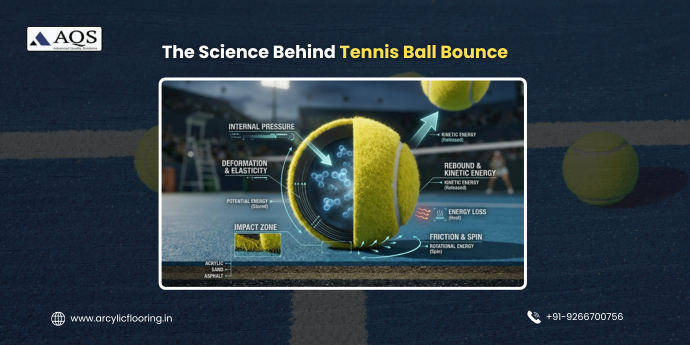
Bounce depends on:
- Internal pressure
- Rubber elasticity
- Surface friction
- Air resistance
When a tennis ball hits Acrylic Flooring Materials, the energy is temporarily absorbed and then returned, producing a predictable rebound. This energy transfer is crucial for maintaining rally rhythm and shot timing.
Environmental Impact and Sustainability
Modern tennis ball production faces environmental challenges due to rubber and felt waste.
Efforts toward sustainability include:
- Recycled rubber cores
- Eco-friendly felt blends
- Tennis ball recycling programs
Court surfaces made with durable Acrylic Flooring Materials also reduce surface degradation, indirectly extending tennis ball life and lowering overall consumption.
Tennis Ball Maintenance Tips
Proper care increases performance lifespan:
- Store in pressurized containers
- Avoid extreme heat exposure
- Keep away from moisture
- Rotate balls during practice
These small steps ensure consistent bounce and grip.
Tennis Ball in Professional Tournaments
Different tournaments use different official balls depending on:
- Court surface
- Climate
- Sponsorship agreements
Hard court tournaments, often constructed using Acrylic Flooring Materials, typically use extra duty balls for enhanced durability.
Transform Your Sports Facility Today!
Contact us for high-quality synthetic sports flooring material and elevate your space!
The Role of the Tennis Ball in Modern Game Speed
Modern tennis has become faster and more powerful. The tennis ball plays a central role in this evolution.
Advancements in materials have led to:
- Improved spin control
- Higher durability
- Better aerodynamic stability
When paired with high-performance Acrylic Flooring Materials, players experience controlled pace and enhanced rally consistency.
Conclusion
The tennis ball is far more than a simple piece of sporting equipment. Its construction, pressure, felt composition, and compatibility with various court surfaces determine the rhythm and quality of the game. Modern court systems using Acrylic Flooring Materials have further enhanced tennis ball performance by offering consistent bounce, reliable friction, and long-term durability. Choosing the right tennis ball for the appropriate surface ensures better gameplay, reduced wear, and optimal match conditions. Understanding these details empowers players, coaches, and court developers to elevate their tennis experience to professional standards.
Frequently Asked Questions
A tennis ball is made of a hollow rubber core filled with pressurized air and covered with wool-nylon felt.
A tennis ball typically lasts 1–3 matches in competitive play and several sessions in recreational play.
Extra duty pressurized tennis balls are best for hard courts and Acrylic Flooring Materials.
Tennis balls lose bounce as internal air pressure gradually escapes through the rubber core.
Yes, many recycling programs repurpose used tennis balls into rubber surfaces and playground materials.
Yes, different surfaces like grass, clay, and acrylic courts significantly influence bounce, speed, and spin.