Pickleball has become a serious sport in India. New courts are coming up in metro and tier-2 cities, leagues and corporate wellness programs are including pickleball along with other sports. Several Indian sports infra brands are already writing about pickleball court flooring and construction which is a clear sign that the market is real and growing.
For entrepreneurs, schools, clubs and housing societies this is not just a fitness trend – it’s a business model. With compact courts, moderate investment and wide age appeal, a pickleball facility can be a profitable and community driven venture when planned properly.
AQS as a specialist in synthetic acrylic sports systems fits into this ecosystem by supplying high performance pickleball court material and multi-layer acrylic systems suitable for Indian climate and usage.
Why Pickleball Business in India Is a Strong Opportunity?
Globally pickleball is considered one of the fastest growing sports and India is catching up fast. Industry write-ups and business articles already describe pickleball as India’s “next big startup play” citing growth in courts, leagues and gear sales.
Upgrade Your Sports Court Today
Get premium synthetic acrylic flooring designed for durability, grip, and performance.
Get Free ConsultationA pickleball business in India has several built-in advantages:
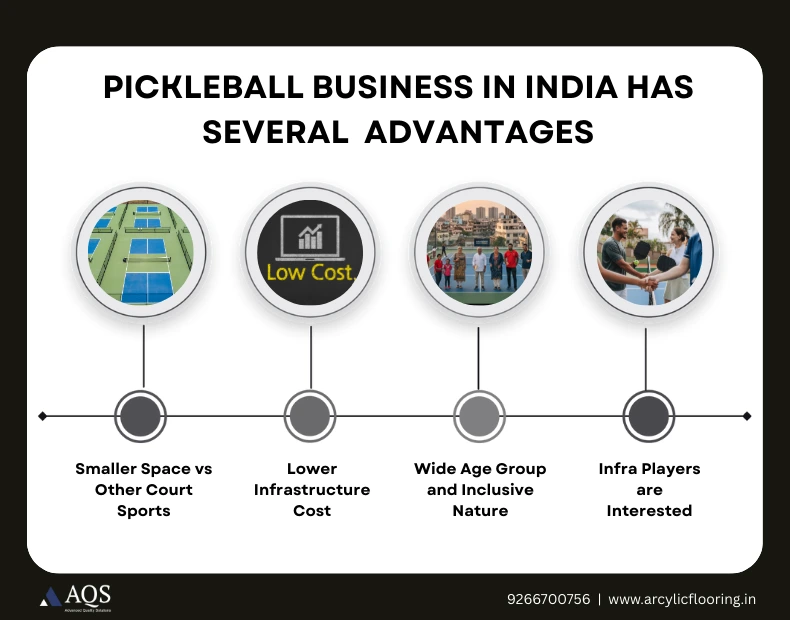
- Smaller space vs other court sports: A pickleball court requires much less space than tennis, badminton complexes or futsal turfs, making it ideal for rooftops, compact plots and underutilised open areas. This smaller footprint allows entrepreneurs to start a facility even in dense urban locations where larger sports aren’t feasible.
- Lower infrastructure cost: The investment required for pickleball court construction—especially with outdoor acrylic flooring is much lower than building large indoor sports arenas or full-sized football turfs. Despite the lower cost the facility can still charge premium rates for coaching, memberships, leagues and hourly bookings improving overall profitability.
- Wide age group and inclusive nature: Pickleball is suitable for children, adults, beginners, seniors and even non-athletes which expands the customer base dramatically. This wide appeal helps facilities fill morning, evening and weekend slots consistently creating all-day revenue opportunities.
- Infra players are interested: More Indian sports infra companies are launching pickleball court flooring, construction materials and surface systems. The increasing supply of pickleball court material indicates that investors, developers and institutions see pickleball as a scalable long term business.
If you are planning a new sports venture or upgrading an existing facility a dedicated pickleball court or a multi-court pickleball zone is a viable business option.
How to Choose The Right Pickleball Business Model
Different places and budgets need different approaches, so the strategy you choose is going to make all the difference in how much money you make, how you run your business, and whether or not you’re able to grow in the long term. Below are the best pickleball business models that are working surprisingly well across Indian markets.
a) Stand-Alone Pickleball Site
A proper stand-alone pickleball place is all about the sport, so you’ve got 2–6 courts that are professionally built, seating to hang out in, good lighting, and a tiny cafe or pro shop where people can grab a snack or buy some gear. This model does well in big cities and some of the bigger tier-2 cities where people are already aware of and interested in the sport. If you’ve got the right coaches, events, and community stuff going on, the demand can really take off.
b) Multi-Sport Facility With Pickleball
If you’ve got a multi-sport facility that includes pickleball along with other stuff like futsal, tennis, or basketball court, you can make the most of the space you’ve got and diversify your income streams. This is a great option for people who already have an existing turf, or real estate developers or sports centres who want to add a sport that’s growing fast without having to invest a lot more.
c) Pickleball Academy and Coaching-Focused Setup
A pickleball academy that focuses on coaching first is all about structured training, skill-building programs, and long-term training plans for kids and adults. This is good for areas with lots of schools and colleges, or cities where racket sports are already super popular.
d) Pickleball Courts in Residential Areas
If you’re setting up a new housing development, gated community or township, you’re going to offer something that’s compact, low-maintenance. This is a good option for developers, housing societies and sports contractors who can install the courts and offer coaching, tournaments and ongoing maintenance.
e) Corporate Parks & Co-Working Spaces
Pickleball is becoming a popular addition to corporate wellness programs, offering stress relief, fitness benefits and team-building opportunities. Best suited for IT parks, co-working hubs, business centres and corporate campuses where employee engagement and recreation are high priorities.
f) Franchise / Brand Partnership Model
In a franchise model, entrepreneurs partner with an established sports or pickleball brand that provides branding, SOPs, support and vendor connections. This reduces the learning curve for first-time owners and brings built-in credibility to the project.
g) Tournament & League-Focused Hub
Some facilities position themselves mainly as venues for leagues and tournaments rather than everyday casual bookings. Their calendar is filled with local, regional and corporate events that bring players from multiple areas.
Each of these models will still depend on high quality pickleball court flooring and reliable pickleball court builders with predictable operating costs.
Pickleball Court Flooring and Materials
Every pickleball project in India starts with selecting the right pickleball court flooring and surface material. Because these impact ball bounce, safety and long term durability. A well built surface not only enhances gameplay but also reduces maintenance issues in the long run.
Base Construction
Concrete base (M20 grade recommended) – Concrete base is the most preferred base for most pickleball court construction projects in India. With a slope of around 1:100 ensures good drainage, minimal waterlogging and smooth finish.
Bitumen/asphalt base- This base offer quicker installation and lower initial cost but it softens in extreme heat and requires maintenance. Concrete is more reliable for Indian climate especially for facilities with high footfall and long term performance.
Components of a High Quality Acrylic Pickleball Court Flooring
Concrete primer – The primer penetrates deep into the concrete surface and creates a strong adhesion base that prevents peeling. This ensures each subsequent layer bonds well for long term durability.
Acrylic resurfacer – The resurfacer evens out surface imperfections and adds controlled texture resulting in predictable ball bounce and better player traction. It also prepares the court for uniform colour coating.
Cushion layers – Cushion layers provide a softer and more forgiving feel underfoot, reducing joint stress during long play sessions. It also enhances the premium look of the facility by providing a more comfortable playing experience.
Colour coats – These coats bring the court to life with vibrant, UV resistant pigments that can withstand heat and weather. The textured finish improves grip and visual contrast, helping players to track the ball better.
Line marking paint – Professional grade line marking paints ensures crisp and long lasting boundaries that don’t fade quickly under sun exposure. High visibility ensures accuracy during competitive and recreational play.
AQS specialises in engineered synthetic acrylic systems designed for Indian weather conditions, high UV exposure, heavy monsoons and high temperatures. These premium pickleball court materials are trusted by schools, clubs, academies and residential facilities for consistent performance, long term durability and professional finish.
Simple ROI for a Pickleball Court Business
Every location is going to play differently. But the overall idea behind starting a pickleball court business in India remains the same. When planning a new facility, the goal is to find a balance between steady daily business and high-value coaching.
Revenue Streams
- Hourly court rentals: This is the main source of income – mostly driven by consistent daily bookings from casual players. But then you’ve got the evening and weekend peak hours where demand ramps up and really starts to make a difference in your bottom line.
- Monthly memberships: These create a stable, predictable income stream even when business is quiet. They also build a loyal customer base that keeps coming back to the facility.
- Coaching sessions: Structured coaching programs generate a nice bit of high-margin recurring income. They also help build a strong community and a long-term ecosystem of players.
- Tournaments and leagues: Hosting events all the time is a great way to get your facility noticed and attract new players. And this bring nice revenue through entry fees and sponsorships. Leagues also help people coming back and build a good reputation for the facility.
- Corporate events and team building exercises: Companies are starting to see the value of using pickleball for team building and wellness events. And this can be a nice, predictable revenue stream with higher per-hour rates than some other bookings.
- Food and beverage sales: Whether you’ve got a full café or just some vending machines, selling food and drink is a great way to enhance the customer experience and bring in some extra profit. Even just having a few partner restaurants or a simple vending setup can add up a good monthly revenue.
Mistakes To Avoid When Starting Up a Pickleball Business in India
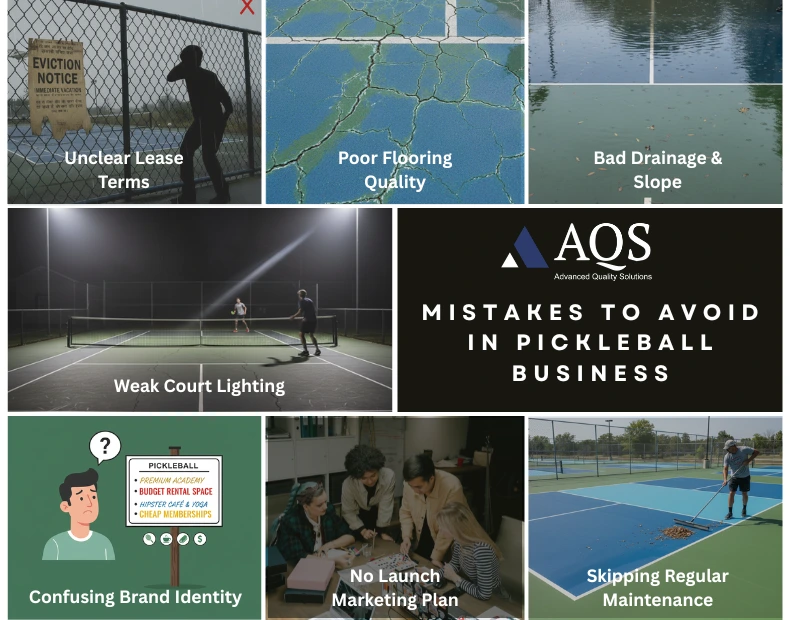
1. Underestimating lease issues – A lot of entrepreneurs end up signing on the dotted line with short term leases or unclear renewal terms, which puts long term viability at risk. Lease disputes can shut you down overnight and leave you with a financial headache.
2. Not taking care with flooring quality – If you cut corners and use sub-par materials for the floor, it will crack, fade or get slippery within months.
3. Ignoring the drainage and slope – If you don’t get the slope and drainage right, your court is gonna be flooded during the monsoons and shut down for weeks. Plus, you’ll be stuck with a hefty repair bill to get it all sorted out.
4. Not doing your homework on the lighting – Badly placed lights or budget options create glare and uneven brightness. A poorly lit court will kill bookings and make the whole experience a pain.
5. Not having a clear message – Too many new facilities try to be all things to all people – premium academy, budget rental space, and café all at once, which just ends up confusing your customers. Without a clear identity, customers scratch their heads trying to figure out what you’re all about.
6. Not a good launch – Launching without a marketing push or promotions is a recipe for disaster. You need some tie-ups with influencers and community events to get the ball rolling in the first 30-60 days.
7. Not having a maintenance plan – Even a well built floor will start to fall apart if you don’t look after it. Cleaning, resurfacing and line touch-ups are a must to prevent those costly repairs down the line.
Step-by-Step Action Plan for Starting a Pickleball Court Business
- Define the business – Single, multi-sport, academy-driven, society-based or corporate-focused? This will help you decide on investment, pricing and long term positioning.
- Shortlist location and land – Open plot, or rooftop? Validate local demand by studying nearby schools, societies, corporates and existing sports facilities.
- Create a basic financial model – Total investment, operational overheads and expected monthly income from rentals and coaching. Build realistic occupancy assumptions to understand payback period and break-even timelines.
- Choose flooring and partners – High quality acrylic pickleball court flooring that performs well in Indian climate. Partner with experienced pickleball court builders who can ensure proper installation and durability.
- Finalise court layout – Number of courts, fencing height, lighting placement, seating arrangement. Space for reception, waiting areas, amenities and easy movement between courts.
- Register and comply – Register your business as sole proprietorship, partnership, LLP or Pvt Ltd as required. Get local permissions, GST (if applicable) and basic safety and facility approvals.
- Plan launch – Attractive opening offers, school partnerships and launch tournaments to create buzz. Use influencers, Instagram reels and community events to build your first set of regular players.
- Set up operations – Booking system, train staff, hire coaches, daily SOPs. Safety measures, emergency protocols and maintenance routines clearly defined.
- Monitor first 90 days – Track bookings, customer feedback and usage patterns to understand what’s working. Adjust pricing, coaching batches and marketing based on real time performance.
- Phase 2 growth – Add more courts, academy programs or corporate tie-ups based on demand. Explore sponsorships, tournaments and merchandise as new revenue streams.
Where AQS Flooring Make a Profitable Business
Starting up a pickleball business is all about getting the four key elements right: courts, coaching, community, and long-term consistency. The court flooring is the foundation that really sets the whole thing in motion. Our pickleball courts are engineered to handle India’s toughest conditions. The third party installers design systems specifically for harsh Indian climate – hot summers, torrential rain, and intense UV light. And you will get a solid, consistent flooring, which needs minimal upkeep, even year after year.
With multi-layer cushion and resurfacer tech, you get the best surface which offers good grip and a smooth, fast ball bounce. This is key for long, safe, high-energy gameplay for all ages. Our coatings are made with top-notch pigments that resist fading, even under the harsh sunlight. So your courts stay looking vibrant and good on social media, too. AQS offers expert advice on how to get your concrete base right, drainage slope, expansion joints, and finishing requirements without waterlogging or cracking.
Conclusion
With compact court sizes, affordable build costs, and appeal across all age groups, pickleball’s got a business model that’s all about blending community, fun, and profit. When you combine that with smart planning – right location, court build costs, right flooring, and partnering with skilled installers – your facility will attract players and learners.
Whether you’re building a single pickleball zone, adding courts to an existing sports facility, or even a home court, the long-term success is using top-quality materials. AQS’s synthetic acrylic systems deliver on durability, performance, and visual appeal – courts that will draw in players and withstand whatever the Indian climate throws at them.
Frequently Asked Questions
Yes, pickleball business is profitable but with the right location, pricing, and community-building, many facilities can target a 2–4 year payback depending on land cost and scale.
The pickleball court cost per court varies widely, but outdoor acrylic systems on a good base generally sit in the low-to-mid lakh range for a fully finished court, excluding land.
Multi-layer synthetic acrylic systems on a proper concrete slab are most popular pickleball court surface option.
Yes, building a home pickleball court on a terrace, driveway, or garden is possible. If structural safety and proper base construction are ensured.