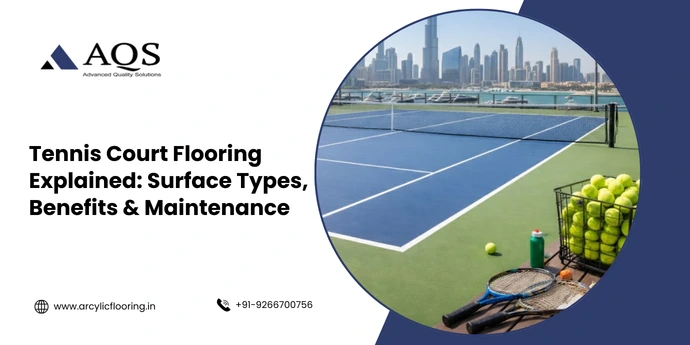
Choosing the right Tennis Court Flooring is one of the most important decisions when building or renovating a tennis court. The playing surface directly affects ball speed, player comfort, injury risk, maintenance cost, and long-term durability. Whether the court is for a school, sports academy, club, residential project, or tournament facility, understanding different Tennis Court Surface Types helps in selecting the ideal solution.
This guide explains everything about Tennis Court Flooring material, surface options, benefits, and maintenance requirements in simple, user-friendly language.
What Is Tennis Court Flooring?
Tennis Court Flooring refers to the top playing layer installed over a prepared base (usually concrete or asphalt). This layer determines:
- Ball bounce consistency
- Speed of play
- Grip and traction
- Shock absorption
- Weather resistance
- Maintenance frequency
A high-quality Tennis Court Flooring material ensures long-term performance, player safety, and professional play standards.
Upgrade Your Sports Court Today
Get premium synthetic acrylic flooring designed for durability, grip, and performance.
Get Free ConsultationMajor Tennis Court Surface Types
There are four primary Tennis Court Surface Types used worldwide:
- Acrylic / Hard Courts
- Clay Courts
- Natural Grass Courts
- Synthetic / Cushion Courts
Let’s understand each one in detail.
1. Acrylic (Hard) Tennis Court Flooring
Acrylic-based hard courts are the most popular Tennis Court Flooring material used globally. These surfaces are typically installed over asphalt or concrete and coated with multiple layers of synthetic acrylic.
Key Benefits
- Consistent and predictable ball bounce
- Low maintenance compared to clay and grass
- UV resistant and weatherproof
- Long lifespan (5–8 years before recoating)
- Customizable colors and surface textures
Acrylic Tennis Court Flooring is ideal for schools, academies, residential complexes, and professional training centers. It offers a balanced playing speed and is suitable for all skill levels.
Why It’s Popular
Many modern tournaments use hard courts because they provide a fair balance between speed and control. This makes acrylic systems one of the most reliable Tennis Court Surface Types today.
2. Clay Tennis Court Surface
Clay courts are made from crushed stone, brick, shale, or other loose mineral materials.
Key Benefits
- Slower ball speed
- Higher bounce
- Longer rallies
- Reduced stress on joints
Clay Tennis Court Flooring is popular in regions where slower play is preferred. However, it requires regular watering, rolling, and brushing to maintain quality.
Maintenance Level
High. Clay courts demand daily attention and seasonal resurfacing.
3. Natural Grass Tennis Court
Natural grass is one of the oldest Tennis Court Surface Types. It provides a fast game and low ball bounce.
Key Benefits
- Soft and comfortable underfoot
- Fast-paced matches
- Premium aesthetic appeal
Challenges
- High maintenance
- Requires mowing, watering, fertilizing
- Weather sensitive
Grass Tennis Court Flooring material is mostly used in high-profile tournaments or exclusive clubs.
Transform Your Sports Facility Today!
Contact us for high-quality synthetic sports flooring material and elevate your space!
4. Synthetic / Cushion Tennis Court Flooring
Cushion courts are advanced versions of acrylic systems. They include rubber or cushioning layers beneath the acrylic topcoat.
Key Benefits
- Improved shock absorption
- Reduced injury risk
- Better player comfort
- Ideal for professional training
This Tennis Court Flooring material is widely used in academies and indoor facilities.
Comparing Tennis Court Surface Types
| Surface Type | Speed | Maintenance | Durability | Cost Level |
| Acrylic / Hard | Medium-Fast | Low | High | Moderate |
| Clay | Slow | High | Moderate | Moderate |
| Grass | Fast | Very High | Low-Moderate | High |
| Cushion Synthetic | Medium | Low-Moderate | High | Slightly Higher |
Acrylic systems remain the most balanced and cost-effective Tennis Court Flooring option in most climates.
Benefits of High-Quality Tennis Court Flooring
Investing in premium Tennis Court Flooring material provides long-term advantages:
1. Player Safety
Proper grip and shock absorption reduce slips and joint stress.
2. Consistent Performance
Uniform ball bounce enhances training quality and match fairness.
3. Weather Resistance
UV-resistant coatings prevent cracking and fading.
4. Low Lifecycle Cost
Although initial installation matters, durable surfaces reduce repair and resurfacing costs.
5. Customization
Modern Tennis Court Flooring systems allow multiple color combinations and surface speeds.
How to Choose the Right Tennis Court Flooring
When selecting among different Tennis Court Surface Types, consider:
1. Location & Climate
Hot climates require UV-resistant acrylic coatings. Rainy regions need proper drainage systems.
2. Usage Type
- Schools: Durable acrylic
- Academies: Cushion systems
- Luxury Clubs: Grass or clay
3. Budget
Acrylic surfaces offer the best balance between affordability and durability.
4. Maintenance Capacity
If regular maintenance isn’t possible, avoid clay or grass courts.
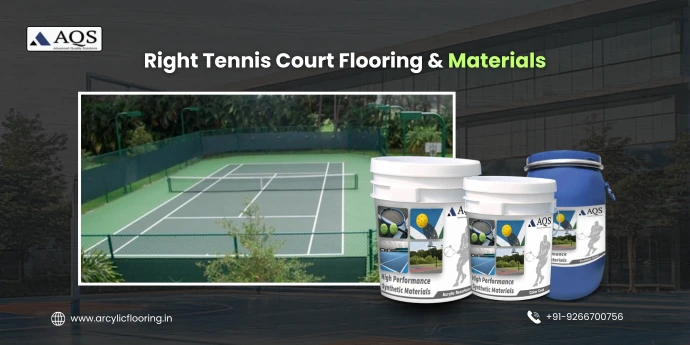
Tennis Court Flooring Maintenance Guide
Proper maintenance increases the lifespan of any Tennis Court Flooring.
Daily Maintenance
- Remove dust and debris
- Clean standing water
- Inspect for cracks
Monthly Maintenance
- Pressure wash (for acrylic surfaces)
- Check line markings
- Inspect drainage system
Annual Maintenance
- Repainting lines
- Surface inspection
- Minor crack repair
Clay and grass courts require more frequent care compared to synthetic acrylic Tennis Court Flooring material.
Signs It’s Time to Renovate Tennis Court Flooring
- Uneven ball bounce
- Surface cracks
- Fading colors
- Slippery patches
- Water pooling
Timely resurfacing ensures safety and performance consistency.
Indoor vs Outdoor Tennis Court Flooring
Outdoor courts need:
- UV-resistant coatings
- Anti-skid texture
- Proper slope for drainage
Indoor courts focus more on:
- Cushion layers
- Shock absorption
- Controlled lighting reflection
Both require proper base preparation for long-lasting Tennis Court Flooring performance.
Future Trends in Tennis Court Flooring
Modern developments include:
- Eco-friendly coatings
- Water-based acrylic systems
- High-cushion performance layers
- ITF-certified synthetic surfaces
Sustainability and player comfort are becoming major priorities in Tennis Court Flooring material selection.
Transform Your Sports Facility Today!
Contact us for high-quality synthetic sports flooring material and elevate your space!
Final Thoughts
Understanding different Tennis Court Surface Types is essential before selecting the right Tennis Court Flooring for any project. While clay and grass offer traditional appeal, modern acrylic and synthetic systems dominate due to durability, performance, and cost-efficiency.
Choosing the correct Tennis Court Flooring material ensures:
- Long-term durability
- Player comfort
- Professional-level performance
- Reduced maintenance expenses
A well-installed tennis court not only enhances gameplay but also increases property value and user satisfaction. By evaluating climate, usage, and maintenance capabilities, the right Tennis Court Flooring can provide years of reliable performance.
If planned correctly, a high-quality tennis court becomes a long-term sports investment rather than just a construction project.
Frequently Asked Questions (FAQs)
Acrylic-based hard courts are considered the best overall option due to durability, low maintenance, and consistent play.
Acrylic surfaces typically last 5–8 years before resurfacing. With proper maintenance, the base can last 15–20 years
Acrylic and synthetic cushion courts require the least maintenance compared to clay and grass.
Yes. UV-resistant acrylic coatings are specifically designed to withstand extreme heat and sunlight.
Most hard courts require resurfacing every 4–6 years depending on usage and weather conditions.
Medium-paced acrylic Tennis Court Flooring is ideal for beginners because it provides consistent bounce and balanced speed.