
Understanding basketball court dimensions in meters is essential when planning, constructing, or resurfacing a court for schools, academies, sports complexes, or community spaces. Whether the court is intended for professional tournaments or recreational play, accurate measurements ensure fair gameplay and compliance with international standards.
Equally important is selecting the right basketball court flooring material, as the surface directly affects performance, durability, and player safety. This comprehensive guide, inspired by the practical expertise of Arcylic Flooring, explains official dimensions, layout details, and how proper flooring systems enhance court quality.
Official Basketball Court Dimensions in Meters
International basketball courts follow standardized measurements to maintain uniformity across competitions.
The official FIBA basketball court dimensions in meters are:
- Length: 28 meters
- Width: 15 meters
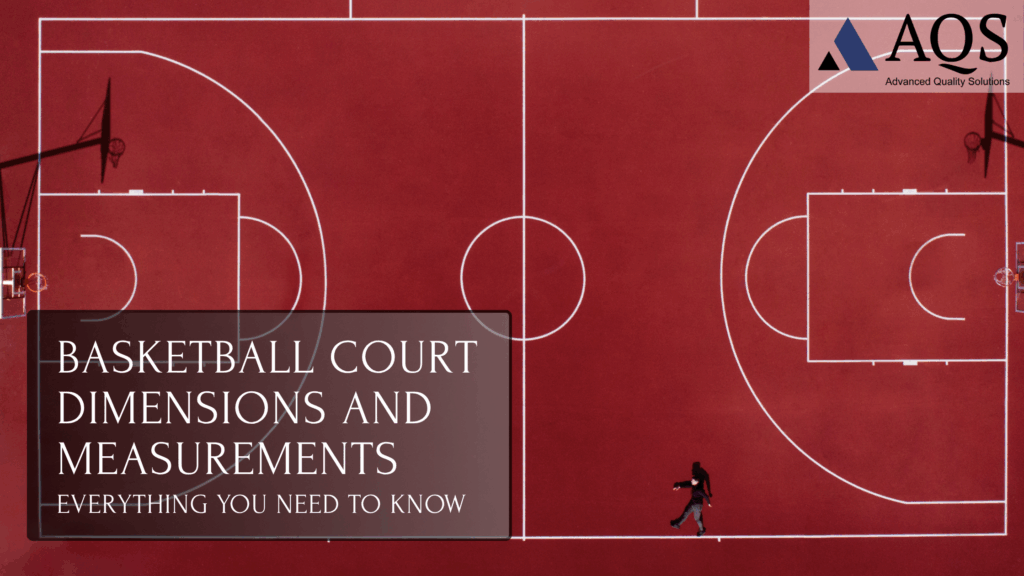
These dimensions apply to professional and international tournaments. The playing area forms a rectangle measuring 28m x 15m, creating a total surface area of 420 square meters. The court length runs from baseline to baseline, while the width spans sideline to sideline.
Key Court Markings in Metric Measurements
Accurate court markings are as important as the overall dimensions.
- The center circle has a radius of 1.8 meters.
- The three-point line is positioned 6.75 meters from the basket (international standard).
- The free-throw line is located 5.8 meters from the baseline.
- The key area, also known as the paint, measures 4.9 meters wide.
Each of these markings must align proportionally within the 28-meter court length to ensure accurate gameplay. Professional installation by experienced providers like Arcylic Flooring ensures precise marking placement.
Half Court Dimensions in Meters
Not all facilities require a full-size court. Many schools and recreational areas install half courts.
A half basketball court typically measures:
- Length: 14 meters
- Width: 15 meters
While smaller, maintaining correct proportional markings is essential for skill development and fair play.
Differences Between FIBA and NBA Dimensions
While this guide focuses on basketball court dimensions in meters, it is helpful to note the difference between international and NBA standards. The NBA court measures 28.65 meters in length and 15.24 meters in width, slightly larger than FIBA courts. For most projects in India and international facilities, FIBA standards of 28m x 15m are followed. Arcylic Flooring recommends aligning construction with international standards for long-term versatility.
Transform Your Sports Facility Today!
Contact us for high-quality synthetic sports flooring material and elevate your space!
Space Requirements Beyond the Playing Area
When planning construction, the total required area extends beyond the official 28m x 15m playing dimensions. Safety margins are recommended around the court perimeter. Ideally, at least 2 meters of additional space should be provided on all sides. This ensures player safety during fast breaks and defensive transitions. Proper spacing also allows for benches, referees, and technical equipment in professional setups.
Importance of Accurate Measurements
Precise basketball court dimensions in meters prevent gameplay inconsistencies. Incorrect length or width can distort three-point distances, free-throw alignment, and player positioning. Professional surveying and layout planning eliminate costly errors during installation. Arcylic Flooring uses modern measurement techniques to ensure courts meet international standards without deviation.
Choosing the Right Basketball Court Flooring Material
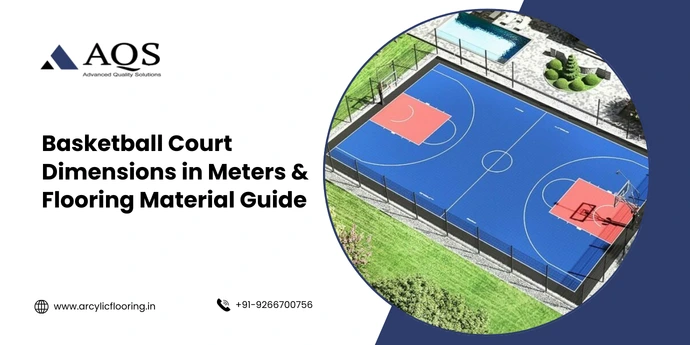
Once dimensions are finalized, selecting the right basketball court flooring material becomes the next critical step. Acrylic synthetic flooring systems are among the most widely used surfaces for outdoor and indoor basketball courts.
These systems typically include:
- Concrete primer
- Acrylic resurfacer
- Cushion layers (optional)
- Color coats
- Line marking paint
High-quality acrylic coatings provide consistent ball bounce and reliable traction.
Why Acrylic Flooring Is Preferred
Synthetic acrylic systems are popular due to durability and cost-effectiveness.
They offer:
- Consistent grip across the entire 28-meter court length.
- UV resistance for outdoor installations.
- Low maintenance compared to wooden or tiled surfaces.
Arcylic Flooring specializes in performance-based acrylic systems designed for Indian climate conditions.
Indoor vs Outdoor Basketball Flooring Material
- Indoor courts may use wooden flooring systems, particularly in professional arenas. However, synthetic acrylic flooring remains a practical solution for multi-purpose facilities.
- Outdoor courts require UV-resistant and weatherproof materials.
The basketball court flooring material must withstand temperature changes, heavy foot traffic, and moisture exposure. Proper surface selection enhances longevity and reduces maintenance costs.
Surface Layers and Performance
The performance of a basketball court depends on proper layering.
- A strong concrete base ensures structural stability.
- The resurfacer smooths minor surface imperfections.
- Cushion layers improve shock absorption.
- Color coatings provide visual appeal and UV protection.
- Line marking completes the professional finish.
Arcylic Flooring ensures each layer is applied according to industry standards for consistent performance.
Maintenance and Long-Term Durability
A well-constructed court with accurate basketball court dimensions in meters requires periodic maintenance.
- Regular cleaning prevents debris accumulation.
- Minor cracks should be repaired promptly.
- Recoating every few years maintains surface performance.
High-quality basketball court flooring material significantly reduces maintenance frequency. Investing in durable acrylic systems ensures cost efficiency over time.

Construction Planning and Budget Considerations
- A standard 28m x 15m court covers 420 square meters, excluding safety margins.
- Accurate estimation prevents material shortages or wastage.
Working with experienced providers like Arcylic Flooring ensures transparent material planning and cost management.
Modern Trends in Basketball Court Construction
Modern sports infrastructure emphasizes player safety and durability. Cushioned acrylic systems are increasingly preferred to reduce joint stress. Multi-purpose courts that accommodate basketball and other sports are becoming popular in schools and residential projects. Standard basketball court dimensions in meters remain the foundation of all these modern developments.
Conclusion
Understanding basketball court dimensions in meters is fundamental to constructing a professional and compliant basketball facility. The official measurement of 28 meters in length and 15 meters in width ensures consistent gameplay and global compatibility. Equally important is selecting the right basketball court flooring material. High-performance acrylic systems provide durability, traction, and long-term cost efficiency.
Transform Your Sports Facility Today!
Contact us for high-quality synthetic sports flooring material and elevate your space!
Frequently Asked Questions
The official international basketball court measures 28 meters long and 15 meters wide.
A half court typically measures 14 meters in length and 15 meters in width.
A standard court covers approximately 420 square meters.
The international three-point line is 6.75 meters from the basket.
Synthetic acrylic flooring is ideal for outdoor courts due to durability and UV resistance.
Yes, material quantity is calculated based on total square meter area.