
Tennis court repair does not require building a brand-new surface every time. They start showing some wear and tear, and the truth is, most courts that look all worn out are still perfectly safe – they just need a bit of timely maintenance to get them back in shape. Many facility owners delay repairs even when the court is still fixable, and often choose to tear it out and rebuild simply because they aren’t sure how tennis court repairs actually work.
Proper tennis court flooring isn’t a one-time fix; it’s an ongoing process. It focuses on restoring the court so it plays safely and performs well again, while protecting the original investment made in building it. In this article we’ll take a closer look at how tennis court maintenance actually works in real-life circumstance, how to know when you’ve gone past the point where just a bit of TLC will do and need to actually resurface the whole thing, and how products from AQS (Advanced Quality Solutions) can help keep your courts in top shape for years to come.
Why Tennis Courts Deteriorate Over Time?
Every tennis court, no matter how well it was built, is eventually going to start to show its age. This isn’t because the court itself is falling apart – it’s just that the top layer of the court has reached the end of its useful life.
Common reasons why courts start to degrade include:
- It’s exposed to the sun and UV radiation, which basically just melts the surface
- The temperature going up and down all the time causes it to expand the court
- A buildup of dust and abrasive particles just wears away the surface
- When it rains, water collects in and starts to wear away the surface
- At a busy tennis club with a lot of players, it just gets worn down.
Mostly, it’s the top layers that get affected by the flooring and coating, not the actual foundation of the court, which is usually fine.
Tennis Court Repair Is a Surface Solution, Not Structural Work
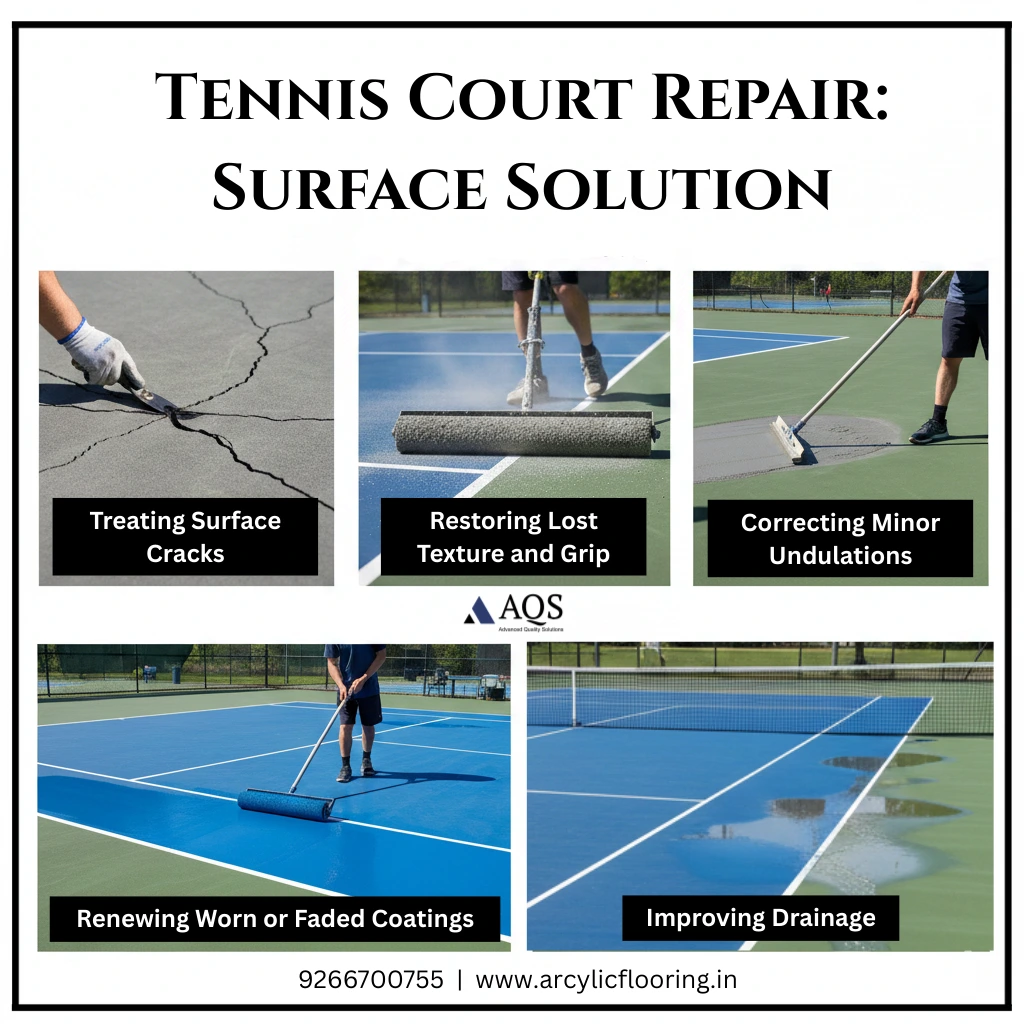
A lot of people think that the moment cracks or fading show up, the tennis court is shot. But the truth is, tennis court repair is just fixing some surface-level problems without touching the underlying base. Tennis court repair basically deals with:
Treating Surface Cracks Before They Spread
You start to see surface cracks when the tennis court starts wearing out. These cracks develop because of temperature changes, the natural ageing of the top layer, or a bit of movement in the base over time. At first, they might seem like no big deal, but if you don’t deal with them right away, water can get in and really accelerate the wear and tear. Especially during rainy weather, that extra moisture just makes the problem worse. Professional tennis court repair is all about catching these cracks early and sealing them up well with some flexible, top-notch fix-it materials that can move with the surface. This way, you stop the cracks from getting any worse, you protect the layers underneath, and you’ve got a lot more life left in that court.
Restoring Lost Texture and Grip
After a while of regular play, the textured finish on the court just wears down. It’s dust, foot traffic, ball bounce, and all that weather exposure; it’s bound to happen. Once the texture goes, the court just becomes a lot slipperier, and that means you’re a lot more likely to get hurt. Restoring some texture during tennis court repair means adding back in a bit of controlled roughness. You can keep the surface grippy enough for control, but smooth enough to protect players’ ankles and joints.
Correcting Minor Undulations
Those minor bumps and dips on the court? They’re usually from uneven wear, settlement of the surface, or just general degradation. And while it’s true they might not seem like a big deal, they really can mess up ball bounce, affect gameplay, and make your players feel uncomfortable. Unlike major structural problems, these issues are usually just surface-level problems. Tennis court repair is the best way to level out those low spots – we use some special compounds designed just for sports courts to get the surface level and looking nice again.
Renewing Worn or Faded Coatings
Fading colours and worn-out paint are just what happens when you’ve got a court out in the sun, sunbathing under all that UV radiation, and weather beating down on it. It’s not like it’s a structural problem or anything, but it does really mess with visibility, line clarity, and just the overall look of the place. Renovating worn or faded coatings during tennis court repair means putting on some fresh new acrylic that really brings the colours back to life and gives the court a new protective layer to boot. It’s not just about looks; it’s about keeping the court protected from the elements and keeping it looking sharp for years to come.
Improving Drainage on Tennis Courts
Even if a court has the right slope, a worn surface can still cause drainage problems. As the top layer wears out, it can block water flow, lose its coating, or become uneven. When this happens, rainwater starts to collect on the court instead of draining away. Standing water makes the surface slippery and can damage it quickly. Repairing a tennis court helps by renewing the top layers, allowing water to drain properly again. When water runs off easily, the court dries faster, reduces waiting time after rain, and prevents issues like mould growth or a soft, weak surface.
Understanding the Court Lifecycle: Build → Maintain → Renew.
A tennis court will go through its own natural life cycle – and once you understand this process, you can keep your court in top shape for years to come:
- Building the Base: This is where the construction phase begins – laying down the foundation and installing the initial surface
- Using the Court: As your court gets regular use, it starts to show signs of wear and tear
- Fixing Damage: Fix small damaged areas early to prevent the surface from getting worse.
- Giving it a Makeover: Eventually, the whole surface will need a resurfacing to get it looking and playing like new.
- Rebuilding: This is rarely needed, but if you’ve neglected your court for too long, you’ll have no choice but to tear it up and start again
One of the biggest mistakes tennis court owners make is skipping those vital repair and resurfacing steps and opting for a full rebuild instead – this can be a seriously costly mistake.
Repair vs Resurfacing: Knowing the Difference Saves Money
Tennis Court Repairs
This is where you want to go when:
- It’s only a few areas on the court that need fixing
- The cracks aren’t too deep, and the surface still looks solid
- There are a few patches where the surface grip has worn down
Tennis Court Resurfacing
If your entire court has aged evenly and is looking a bit faded, or if you’ve had to do a lot of repairs over time and the surface is starting to look a bit patchy, then it’s time to resurface. Both options are going to be way more economical than a full rebuild and will still give you a good number of years of use left in your court.
Why Acrylic Systems Are Ideal for Tennis Court Repair?
Hard courts use synthetic acrylic tennis court surface material, and the choice of this material makes all the difference when it comes to how easily it can be repaired.
Acrylic systems are the preferred choice because they:
- Stick really well to the existing surface
- Stay flexible even in extreme temperatures
- Can take additional resurfacing layers without needing to rip the whole thing up
- Bring back the grip and bounce to the court
- Extend the life of the court without having to dig up the base
It’s this repair-friendly nature that makes acrylic so widely used in modern tennis hard court construction.
Tennis Court Repair Materials: What Makes a Repair Last
If you want a tennis court repair that will stick, you need to use the right stuff, not some general-purpose construction product. The pros know that a successful repair involves using a whole system of purpose-designed products, not just a quick fix. These typically include:
- Elastic fillers that will flex with the court, not crack
- Strong patch repair material that doesn’t peel
- Resurfacing layers that can level out the court and bring it back to life
- Textured coatings that’ll give you the traction you need
- line marking materials that are designed to last
Trying to patch the court with the wrong stuff just leads to more problems – and probably more repairs down the line.
Special Case: Repairing Asphalt Tennis Courts
Many older facilities still have asphalt tennis courts, which were built using asphalt instead of concrete and behave a little differently over time.
Asphalt courts:
- Move more in the heat of the day
- Cracks from below can show up again on the surface
- Repairs must stay flexible, or the cracks will come back
Getting the right repair on an asphalt court is a bit of a science, and it’s all about choosing the right resurfacing materials – ones that can flex without cracking.
Cost Perspective: Repair vs Rebuilding a Tennis Court
When owners start looking into repairing their tennis court flooring, they often start asking the wrong questions:
- What does it cost to build a whole new court?
- How much would it cost to build a whole new court?
- How much does a new court set you back?
What they often forget is that repair and resurfacing is an absolute fraction of the cost of new construction, especially if the base of the court is still good. So instead of seeing repair as a cost, you should think of it as smart asset protection.
Tennis Court Repair for Schools, Societies & Academies
Budget cycles and scheduling issues cause many institutional courts to be neglected. But if you let that go on for too long, you end up with a court that’s a safety risk and a huge renovation waiting to happen. Planned repair and resurfacing can really help here:
- It reduces injury risk
- Minimises downtime
- Extends the life of the court
- Avoids the need for emergency reconstruction
It works especially well for facilities with heavy daily use.
About AQS (Advanced Quality Solutions)
AQS (Advanced Quality Solutions) is a company that specialises in manufacturing and providing solutions for high-end sports flooring made from synthetic acrylic. They offer a range of products specifically designed for repairing and resurfacing tennis courts.
AQS Supports Tennis Court Repair Through:
- They provide top-of-the-line acrylic resurfacing products
- Their materials are suitable for use on existing surfaces, which means you don’t have to rip up the whole court to repair it.
- AQS provides detailed specifications for their systems to help ensure that your court will perform well over the long term
- They also offer expert advice to contractors and facility managers who have questions about installation and maintenance.
AQS is not about patching things up with a temporary fix. They’re all about making repairs that fit with the longer-term plans for resurfacing. That way, courts stay in good shape for years to come.
Real-World Repair Scenarios
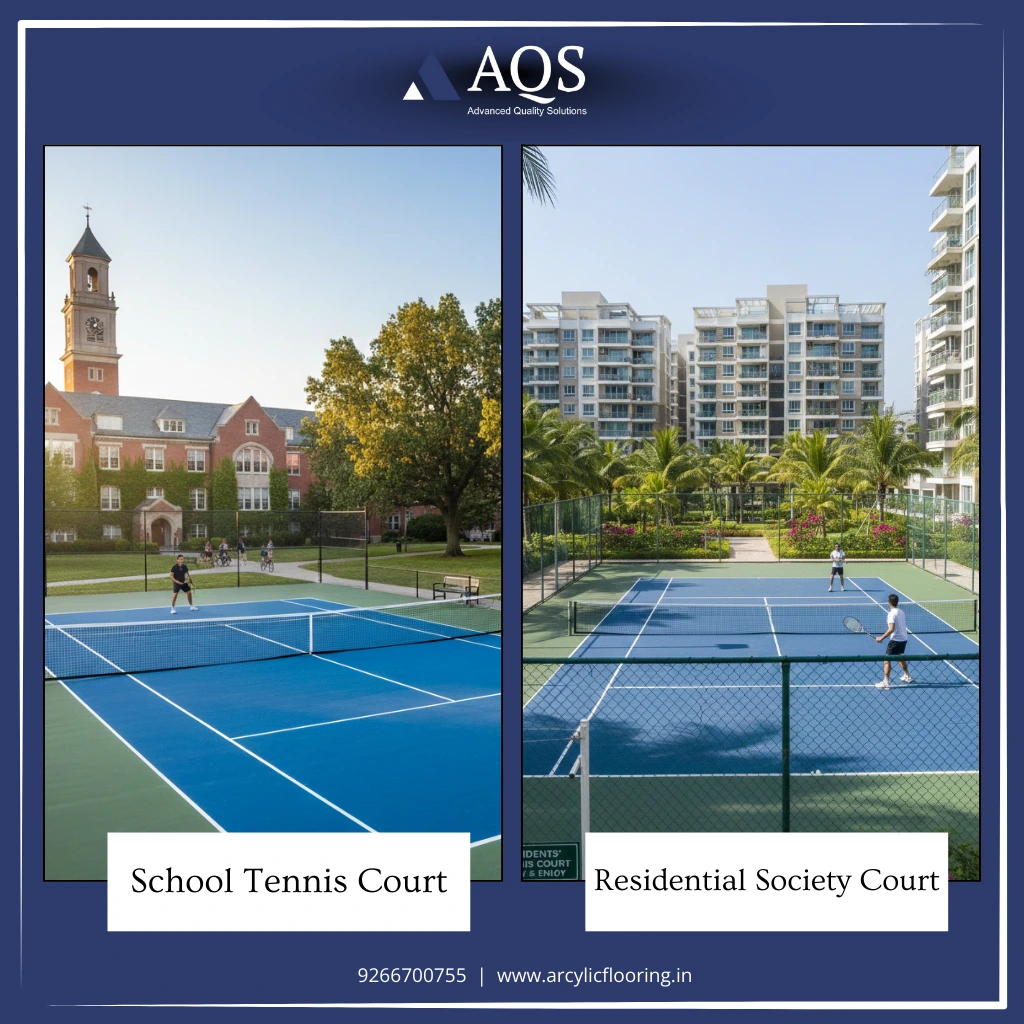
School Tennis Court
A court had got to the point where it was looking faded and covered in cracks. Rather than tearing up the whole thing and starting again, the AQS team decided to:
- Deal with the cracks
- Do a full resurface
- Make sure the court has a good grip and bounce
Residential Society Court
Players were complaining about slipping, and the court wasn’t playing evenly.
- The AQS team sorted out the texture and got the line markings right
- They also managed to renew the surface without having to do any major work on the base.
How often should you repair a tennis court?
The frequency of repairs depends on things like:
- How much exposure does he get to the elements
- How much use is the court getting daily
- Which type of surface was originally used
- How well you maintain it
The sooner you catch problems, the better – small issues can quickly turn into major problems if you leave them.
When Professional Advice Is Essential
If you’ve got a court where cracks keep coming back, the grip is starting to go, or there’s water sitting on the surface, then it’s probably time to get some professional advice. You want someone who really knows about surface systems and the right materials to use, not just some general tennis court construction company.
Final Thoughts
Tennis court repair is not about making a fancy new look – it’s all about giving your court the TLC it needs to keep on performing safely and like new for years to come. And luckily, it is possible to get years of life out of even the oldest courts with the right approach and materials. You can repair most tennis courts several times before they ever need a full rebuild.
By using the top-of-the-line acrylic repair and resurfacing systems from AQS, facility owners can keep their court up and running – and looking like new – for decades without breaking the bank.
Frequently Asked Questions
Yes. If the base is sound, repair or resurfacing costs far less than building a new tennis court.
We use professional acrylic fillers, resurfacing compounds, textured coatings, and durable line marking materials—just like new courts use.
If the base is stable, resurfacing restores the court’s performance, safety, and playability without rebuilding.
With quality materials and proper care, a tennis court can last for many years without major issues.