
Pickleball is emerging very fast in India. With its simple rules, the speed and energy of the game, and the fact that you don’t need much space to play. This combination is winning over sports enthusiasts, schools, clubs, and fitness centers alike. As interest in pickleball grows, facility owners and developers are asking themselves one crucial question: What are the best materials for pickleball court flooring options?
The answer lies in acrylic flooring. This is a high-performance, low-maintenance solution that strikes the perfect balance between durability, player comfort, and the kind of playability you’d expect at a pro level. At AQS, we specialize in Pickleball Court Synthetic Flooring systems that are tailored to Indian weather conditions, usage patterns, and global performance standards.
In this blog, we’ll explore why acrylic is the leading option for pickleball court construction—and what that means for you. We’ll look at the advantages it offers, how it stacks up in terms of cost, installation, and versatility. That way, you can make an informed decision about your court.
What is a Pickleball Court?
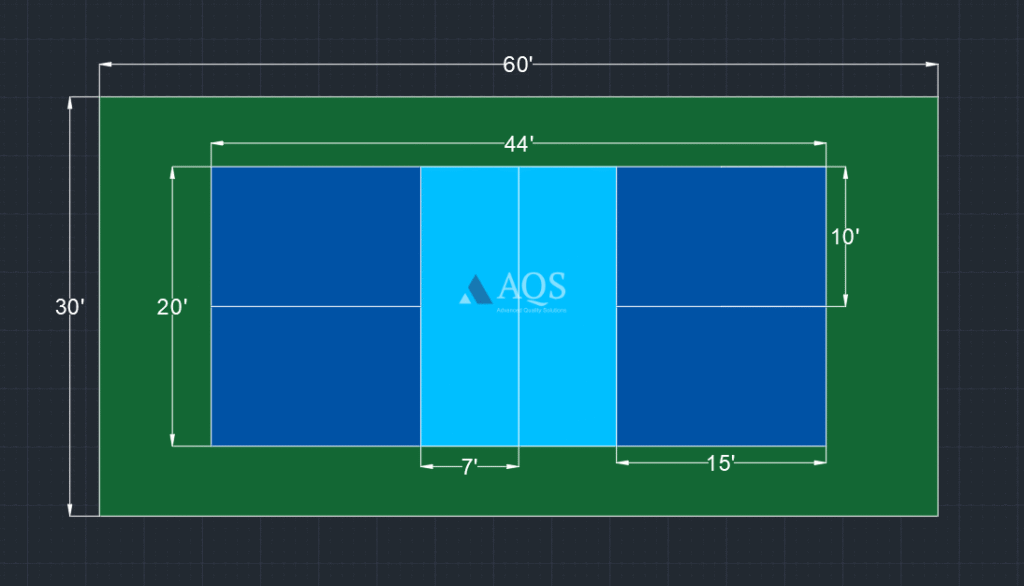
A pickleball court is a small, rectangular playing surface designed for the fast-growing sport of pickleball. It’s a combination of tennis, badminton, and table tennis, so easy to learn and suitable for all age groups. A standard pickleball court is 20 feet wide and 44 feet long for both singles and doubles.
Upgrade Your Sports Court Today
Get premium synthetic acrylic flooring designed for durability, grip, and performance.
Get Free ConsultationUnlike tennis, the pickleball court has a lower net, non-marking paddles, and a perforated plastic ball, which makes the game more controlled and accessible to all levels of players. The court has specific zones like the non-volley zone (kitchen), service areas, and baseline, which make the game strategic. Pickleball courts can be built both indoors and outdoors using materials like acrylic flooring, asphalt, concrete, or modular tiles. Acrylic is the preferred pickleball court material as it provides ideal grip, consistent ball bounce, and long-term weather resistance – suitable for the Indian climate. Whether for residential games, community centers, sports academies, or professional events, a well-designed pickleball court is a safe, fun, and high-performance playing surface.
Pickleball Court Construction & Flooring
Choosing the right pickleball court flooring is essential for getting the right balance of performance, durability, and cost-efficiency. Whether you are building a home pickleball court, resurfacing an old area, or planning new pickleball court construction for a school or club, the flooring material directly impacts grip, bounce, comfort, and long-term maintenance.
Here are the most commonly used pickleball court material options:
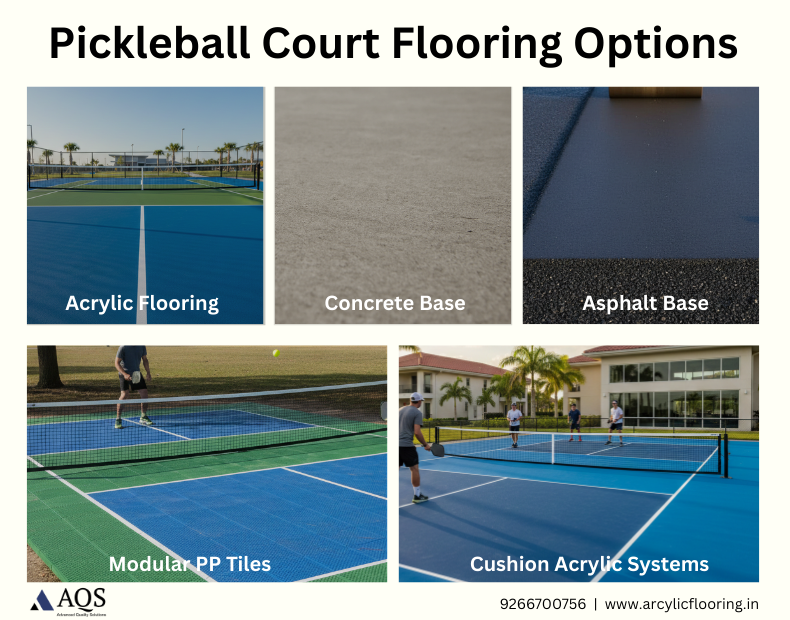
1. Acrylic Flooring
Acrylic is the industry-standard pickleball court floor because it offers excellent ball response, slip resistance, UV stability, and affordable maintenance. It is widely used by pickleball court builders for both outdoor and indoor installations in India due to its durability in extreme temperatures.
2. Concrete Base with Acrylic Coating
A concrete base coated with acrylic layers is one of the strongest and longest-lasting outdoor pickleball flooring systems. It provides consistent bounce and requires minimal maintenance if the base is designed correctly with proper slope and curing.
3. Asphalt Base with Acrylic Coating
Asphalt courts are smooth, budget-friendly, and quick to install. When combined with acrylic coatings, they offer better flexibility and shock absorption than bare concrete, making them suitable for recreational or community pickleball courts.
4. Modular PP Tiles
Modular polypropylene tiles are used when fast installation or portability is needed. They provide decent grip but are more expensive than traditional acrylic surfaces. They are ideal for rooftops, rental properties, or seasonal pickleball court installation.
5. Cushion Acrylic Systems
Cushioned acrylic systems use extra rubberized layers below the acrylic topcoat. This reduces joint impact and enhances comfort, making them a preferred choice for academies and high-usage commercial facilities. Acrylic remains the best-performing pickleball court flooring option for India’s climate, offering the ideal combination of grip, durability, and cost-effectiveness.
Outdoor vs. Indoor Acrylic Pickleball Court Construction
Indoor Pickleball Court Flooring
Indoor acrylic pickleball flooring is designed for smooth and consistent play. Its non-glare finish means you can see clearly under artificial lighting, with no eye strain for players. The surface has extra cushioning to reduce joint stress and is comfortable for long hours of play. Plus noise reduction to keep the gym or indoor arena quiet, where echo and sound levels are a concern. Perfect for schools, clubs, and multi-purpose sports halls looking for comfort, safety, and performance.
Outdoor Pickleball Court Flooring
Outdoor acrylic pickleball courts are designed to withstand the elements and perform consistently. They have UV-stable colors that won’t fade under direct sunlight, looking fresh for years. The flooring has an anti-slip texture to ensure safe play even in intense matches in hot or damp conditions. Most importantly, the material is rain and humidity resistant to prevent surface damage and keep the court playable all year round. Perfect for parks, residential communities, and sports complexes where durability and all-weather performance are key.
Both configurations utilize the same Synthetic Acrylic Pickleball Court Flooring Material, but tailored in finish to your room and climate requirements.
What are the Pickleball court dimensions?
One of the reasons for pickleball’s increasing popularity is its small court size. Pickleball court flooring occupies half the space that tennis courts occupy, which makes it perfect for cities and institutions with limited land. Standard pickleball court dimensions are 20 feet wide and 44 feet long. You can even accommodate several courts in the space of a single tennis court, which can accommodate more players and utilize your facility better.
Benefits of Acrylic Pickleball Court Flooring
- Weather Resistance: India’s weather is unpredictable, and the acrylic pickleball court system, made from UV and weatherproof materials, is designed to withstand sun, rain, and temperature fluctuations. It won’t crack, fade, or warp, and you can rest assured for years to come.
- Safety and Comfort: Pickleball players need a surface that provides good grip and cushioning. Our weather-resistant flooring reduces slips and reduces impact on joints. Whether you are a beginner or a seasoned player, you can enjoy a safe and comfortable game.
- Cost-Effective and Low Maintenance: The cost of pickleball court installation with acrylic is more affordable than other sports surfaces. Once installed, it requires minimal upkeep, saving you time and money in the long run.
- Versatility: Acrylic systems are indoor and outdoor surfaces and can be designed as multifunctional spaces that can adapt to different environments. Whether you are installing on rooftops, indoor gyms, or open grounds, acrylic is flexible and easy to install.
Why Acrylic Flooring is Ideal for Pickleball Courts
At AQS, we specialize solely in acrylic pickleball court systems made from UV and weather-resistant materials. Other types of flooring options in pickleball courts cannot compare to acrylic in its unique blend of safety, playability, appearance, and long-term performance.
Here’s why it excels:
- Robust and high-performance synthetic pickleball court flooring
- Low maintenance and long-lasting
- Custom color and texture choices
- Ideal grip and bounce for recreational and competitive play
- Easy installation over an asphalt or concrete base
Whether you’re installing indoor pickleball flooring or outdoor pickleball court flooring, acrylic conforms to your specifications and provides a professional-grade finish every time.
Why Choose Synthetic Acrylic Materials for Pickleball Court?
Synthetic Acrylic is the go-to choice for pickleball courts because it strikes the perfect balance between delivering top-notch performance, keeping players safe, and lasting the distance. You’ll find that the best systems are built with premium-grade acrylic resins, high-quality pigments & carefully graded silica sand to give you a grip that’ll keep you on your toes without being too harsh. When you put it all together, you get a consistent ball bounce, some seriously reliable grip & a playing surface that’s as smooth as silk, perfect for players of all ages & skill levels.
When put to use in pickleball court construction, these acrylic systems create a seamless, non-porous layer that won’t crack, fade, or weather. That’s especially good news for places like India, where courts need to handle extreme heat, torrential downpours & UV rays all year round. And the best part is that synthetic acrylic flooring is as adaptable as you are – you can customise the texture, the speed of play & even the colour to suit whether you’re a weekend hacker or a pro. With performance standards that are widely accepted around the world, & durability that’s tailored to your local climate, synthetic acrylic gives you the best of both worlds – top-notch international grade playability, & seriously long-lasting performance even when you’re playing outdoors. That’s why it’s a reliable & cost-effective solution for builders, sports complexes, residential spaces, community projects & sports academies the world over.
Which surface is best for a pickleball court?
| Feature / Benefit | Acrylic Flooring (Recommended) | Modular PP Tiles | Bare Concrete | Bare Asphalt |
| Ball Bounce Quality | Consistent, tournament-grade | Standard bounce | Hard & uneven | Moderate |
| Surface Grip / Traction | Excellent slip resistance | Good grip | Low grip | Medium |
| Weather Resistance | UV & rain resistant | Moderate | Poor | Good |
| Player Comfort & Shock Absorption | Reduces joint stress | Slight cushioning | Very hard | Slight cushioning |
| Maintenance Needs | Low (easy cleaning) | Medium (tile replacements) | High (cracks, dust) | Medium |
| Cost of Pickleball Court Construction | Moderate & cost-effective long-term | High (expensive tiles) | Low upfront, high maintenance | Medium |
| Lifespan | 5–7 years | 3–5 years | 4–6 years | 5–6 years |
| Best Application | Professional courts, clubs, schools, outdoor & indoor | Rooftops, temporary courts | Budget builds | Parks & community spaces |
Key Factors to Consider When Choosing a Pickleball Court Flooring
When planning a pickleball court, the kind of flooring you choose really needs to fit in with how much use it’s going to get, where it’s located, how often it’s going to need maintenance, and how much you are willing to spend in total. Think about the following factors, and you’ll be able to pick a pickleball court floor that lasts a long time and won’t break the bank.
- Surface Grip & Player Safety: You want the flooring to give your players a good grip so they don’t slip around when they are running fast. Acrylic systems work well for this; they have a nice level of grip even when it’s a bit humid, which makes them a good choice for casual and competitive games both.
- Weather Resistance: If you are putting the pickleball court outside, you are going to have to be prepared for it to get hit by the weather. Heat, UV, rain, and humidity can all take their toll on a court. You want something that’s not going to fade or change in any way throughout the year, especially if you live somewhere with a lot of sun, like India.
- Bounce & Speed of the Ball: A good pickleball court should have a consistent bounce and speed. Acrylic-coated courts tend to do a good job of this, which means players can practice and train with more confidence.
- Comfort & Shock Absorption: If your players are going to be standing on the court for a long time, you want it to be comfortable for them. If you can have a surface that absorbs some of the shock, then that’s a good idea. Cushion acrylic systems do this, and they don’t compromise on grip or ball speed either.
- Foundation & Base: The base of the court is really important, too. If it’s not built on a proper base, then the whole thing can fall apart after a little while. Get that bit right, then, and you should be good to go.
- Budget & Cost: Of course, the cost of all this is going to vary depending on the materials you choose, the size of the court, and how much work goes into it. Acrylic flooring tends to be a good all-round choice because it’s not too expensive and it’s easy to look after.
- Indoor or Outdoor Court Requirements: If your court is going to be outside, then you want something that’s going to stand up to the weather. If it’s going to be inside, then you might be able to get away with something a bit more special, like a non-glare finish to cut down on glare and a surface that absorbs a bit of noise.
- Maintenance Expectations: It’s worth thinking about how much maintenance you are going to want to do on the court. Some surfaces are a lot easier to look after than others. Acrylic courts are pretty simple to clean and just need to be recoated now and then.
Pickleball Court Surface Maintenance and Lifespan
Proper maintenance ensures that your pickleball court floor remains safe, responsive, and visually appealing throughout its life cycle. Whether you’re building a home pickleball court or managing a commercial sports facility, consistent care directly increases performance and longevity.
Routine Maintenance
- Regular cleaning prevents debris buildup, which can affect traction and reduce player safety. It also helps maintain an even playing surface for consistent ball bounce.
- Immediate cleaning stops stains from setting into the surface and prevents chemical damage to the pickleball court material over time.
- Standing water can weaken acrylic layers and lead to algae growth, so maintaining proper slope and drainage keeps the court in playable condition year-round.
- Moisture-heavy seasons increase biological buildup, and timely cleaning helps preserve surface grip and minimizes slipping hazards.
Lifespan of Pickleball Court Flooring
- Acrylic flooring lifespan: 8–12 years- This makes acrylic one of the most durable pickleball court materials, offering long-term value and minimal maintenance costs.
- PP tiles lifespan: 5–7 years- Exposure to sunlight and repeated foot traffic can cause wear, so modular tiles may need periodic replacements.
- Concrete/asphalt without coating: 3–6 years- Bare surfaces deteriorate faster due to weather changes and impact forces, making coatings essential for extended durability.
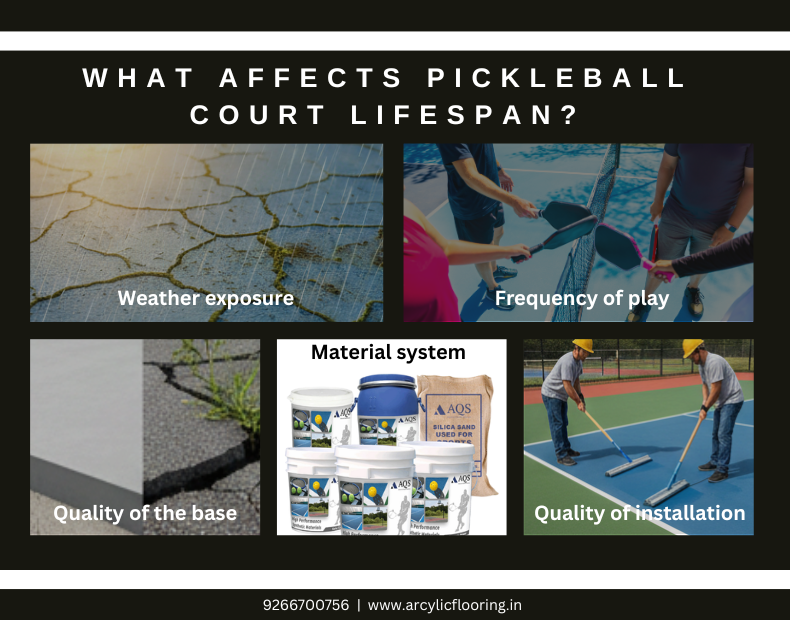
Factors That Affect Lifespan
Upgrade Your Sports Court Today
Get premium synthetic acrylic flooring designed for durability, grip, and performance.
Get Free Consultation- Weather exposure- Extreme climates accelerate surface wear, affecting color retention, grip, and structural stability of the pickleball floor.
- Quality of the base- A strong, level base ensures long-term performance, while poor base preparation may lead to cracks or uneven bounce.
- Frequency of play- High-traffic courts naturally experience more wear, making regular maintenance essential for consistent performance.
- Quality of installation- Professional installation ensures proper layering, curing, and surface finishing, which directly impacts durability.
- Material system- Premium acrylic systems offer better UV resistance, cushioning, and longevity than low-grade or thin-coat materials.
A well-installed acrylic court ensures excellent durability, long-term performance, and low maintenance requirements, making it the most reliable choice for pickleball court flooring
Why Choose AQS for Your Pickleball Court Flooring?
At AQS, we’re not another flooring company—we’re experts in acrylic synthetic sports surfaces. Our commitment to quality and customer satisfaction makes us the first choice for pickleball court flooring across India.
What You Get with AQS:
- High-quality pickleball Court Synthetic Flooring options.
- Durable, weather-resistant flooring that withstands the elements for years.
- Expert guidance from planning to the installation of a pickleball court.
- Affordable pricing with transparent quotes.
- On-time project completion and post-installation support.
We work with academies, schools, resorts, government organizations, and sports clubs to create high-quality pickleball flooring that consistently delivers.
Conclusion
If you’re looking for the best pickleball court surface, you can stop here with synthetic acrylic systems. Relying on and enjoyed by pros and amateur players alike, acrylic provides superior performance, safety, durability, and beauty. Whether it’s new construction or resurfacing installation, AQS guarantees your pickleball court installation will be seamless, affordable, and long-lasting.
Pickleball court floors occupy half the space that tennis courts do, so it is a great space-saving investment for projects with limited space. Pair that with synthetic pickleball court flooring that’s durable and has high performance, and you’ve got a solution that will last and improve your facility.
Frequently Asked Questions
An acrylic surface for a pickleball court, properly maintained, can last from 5 to 10 years or more. The surface is resistant to fading, cracking, and weather-related damage, and is a good long-term investment.
It usually takes 7 to 10 days to install a complete pickleball court using acrylic surfacing, depending on site conditions. This includes preparation, multiple layers, and line marking.
The average cost of a structured synthetic acrylic pickleball court surface is from about ₹2.5 lakhs, but it can go higher based on specifics at the site. It can be an affordable alternative due to its hardness, durability, and low maintenance.
The standard pickleball court dimensions are 20 feet wide by 44 feet long for both singles and doubles, and we recommend at least 10 additional feet of clearance on both ends and sides of the depth of the court for safe play and clearance.


Comments are closed.