Pickleball has become one of the fastest-growing sports in India, attracting players of all ages. If you have a sports facility, run a school, or want a backyard court, it’s key to know the pickleball court size, layout, and materials for a pickleball court. This ensures a great playing surface. This guide covers all you need to know about pickleball courts. We’ll discuss court dimensions, layout, flooring materials, and tips for choosing the best builders for your project.
What is the Standard Pickleball Court Size?
Pickleball is no longer just a backyard hobby—it’s now one of the fastest growing sports in the world, including in India. Whether you are a beginner learning the rules or an organization planning to build a court, knowing the official pickleball court size and dimensions is the first step. Standardized measurements, certified by the International Federation of Pickleball (IFP), ensure consistent playability and fairness across recreational and professional games.
Standard Pickleball Court Dimensions
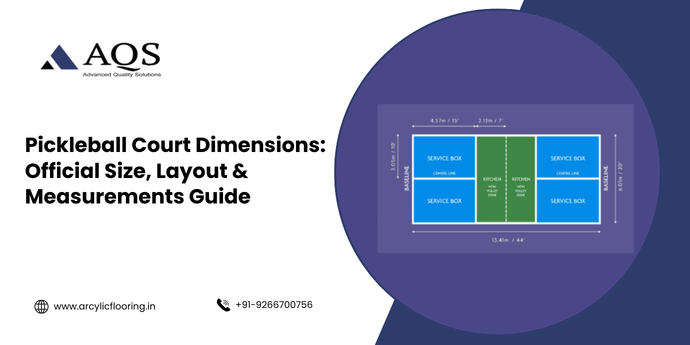
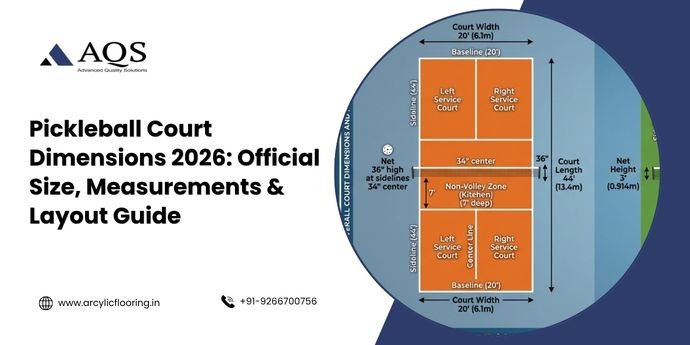
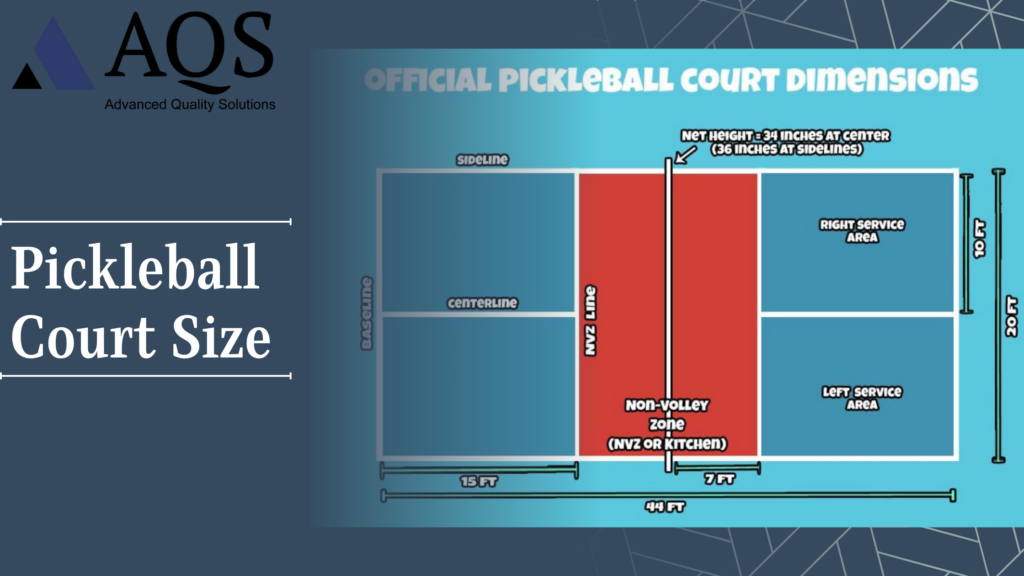
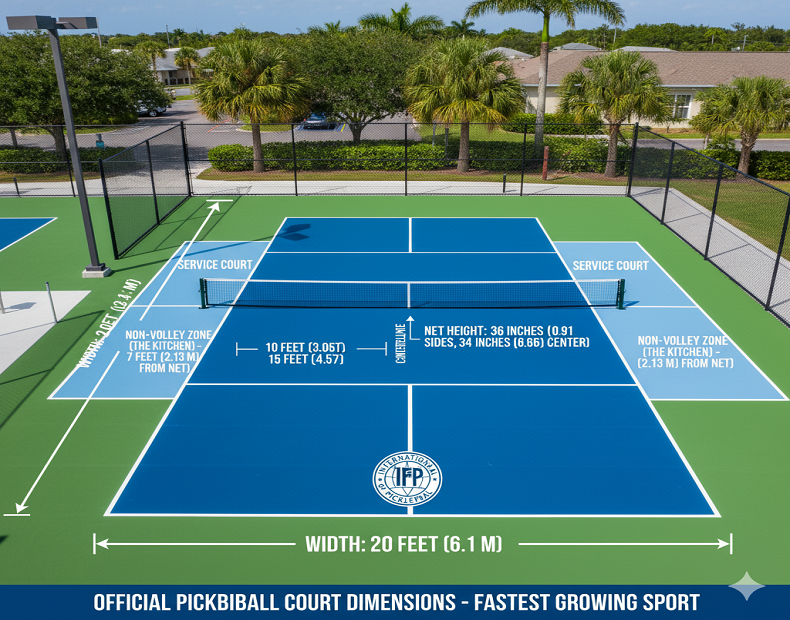
A pickleball court is 20 feet wide and 44 feet long (6.1 m × 13.41 m). These dimensions are the same for singles and doubles matches, so no need to set up different courts. Compared to tennis, the court is much smaller, which makes pickleball faster, more strategic and for all age groups.
Length of Pickleball Court
The total length of the pickleball court is 44 feet (13.41 meters) from baseline to baseline. This gives enough space for rallies, powerful serves and defensive play while keeping the game quick and easy to follow. The compact length allows you to fit multiple pickleball courts in the same area where a single tennis court can fit.
Upgrade Your Sports Court Today
Get premium synthetic acrylic flooring designed for durability, grip, and performance.
Get Free ConsultationWidth of Pickleball Court
The width of pickleball court is 20 feet (6.1 meters). This width gives doubles teams enough space to cover the court while keeping singles matches fast and challenging. The smaller width than tennis means less running, making pickleball easier on the body while still fast paced.
Non-Volley Zone (NVZ)
Pickleball’s most unique feature is the Non-Volley Zone, also called the “Kitchen.” This area is 7 feet (2.13 meters) from the net on both sides. Players cannot volley the ball (hit it in the air without letting it bounce) while inside the NVZ. This rule adds strategy, prevents smashes at the net and encourages clever shot placement instead.
Service Areas
Each side of the court is divided into two service zones, by the centerline. A service box is 10 feet wide by 15 feet deep (3.05 m × 4.57 m) excluding the NVZ. Players must serve diagonally across into the opposite service box. These marked service areas ensure balanced rallies and fair play, especially in doubles matches.
Net Height
Pickleball net is lower than a tennis net, longer rallies. At sides 36 inches (0.91 m) and at center 34 inches (0.86 m). This design is a mix of speed and strategy, fun for casual players and competitive athletes.
Key Considerations When Building a Pickleball Court
When planning a new pickleball court, certain factors can greatly impact its performance and longevity:
- Orientation: For outdoor courts, position the layout in a north–south direction to minimize glare from the sun and ensure better visibility throughout the day.
- Drainage: A strong base with proper slope and water flow prevents puddles, cracks, and long-term surface damage, especially during the monsoon season.
- Lighting: Install uniform, non-glaring LED lighting to maintain clear visibility for evening or indoor matches, enhancing both safety and playability.
Drainage is crucial to extend the life of the court, especially during monsoon season. Proper lighting is for safe play during early mornings and evenings.
Common Mistakes in Building a Pickleball Court
Building a pickleball court is fun but many mistakes can cost more, play poorly and require frequent maintenance. To have a long lasting and professional court, you need to know the common mistakes in pickleball court construction and how to avoid them.
1. Incorrect Court Alignment
One of the most overlooked is alignment. Outdoor courts placed east–west get too much glare during sunrise and sunset, making playing uncomfortable. The correct alignment is north–south which minimizes sun interference and better visibility.
2. Poor Base Work
The base is the foundation of a court. Skipping proper leveling, compaction or drainage systems often results in cracks, puddles and uneven bounce. A strong concrete or asphalt base with slope for drainage is crucial for durability.
3. Wrong Flooring Material
Not all surfaces are created equal for pickleball. Choosing low quality paints or generic flooring increases maintenance cost and compromises performance. Synthetic acrylic flooring is the best material because it has UV stability, slip resistance and consistent ball bounce.
4. Ignoring Non-Volley Zone (NVZ) Markings
The “Kitchen” or NVZ is part of pickleball. Incorrect dimensions or poorly marked zones can make the court non-compliant to official rules. Always follow standard dimensions: 20 feet × 44 feet with 7-foot NVZ on each side of the net.
5. Inadequate Lighting
For indoor courts or evening outdoor play, poor lighting can reduce visibility and increase injuries. Using non-glare, evenly distributed LED lighting is important for safe and professional play.
6. Overlooking Accessories and Safety Features
Many projects overlook essential add-ons like fencing, nets or cushioned coatings to cut cost. While optional, these features improve safety, protect the court and enhance the playing experience.
7. Lack of Professional Installation
DIY or inexperienced contractors may seem cheaper but errors in surfacing, line marking or slope management can cause long term damage. Partner with experienced pickleball court builders to ensure correct installation and avoid costly mistakes.
Best Pickleball Court Flooring Options
At AQS, we specialize in acrylic sports flooring for pickleball courts. Our flooring system is built to last. It offers great performance and resists weather, making it ideal for outdoor conditions in India.
Acrylic Court Surface on Concrete
An acrylic court surface on a concrete base is one of the most popular choices for pickleball court construction. Concrete is super stable and durable so the acrylic layers bond well and the ball bounces smooth and consistent. Plus it’s great UV resistance when combined with acrylic coatings so the surface stays vibrant for years.
Pros: Concrete bases are super durable, low maintenance and wear and tear resistant so great for long term use. Minimizes surface irregularities, reduces the risk of cracks if built properly and plays great.
Cons: The only con of concrete is it’s rigid. With little to no cushioning it can be hard on the joints during long play. Initial installation cost for concrete bases can be higher than asphalt.
Acrylic Court Surface on Asphalt
An acrylic court surface on an asphalt base is another good option especially for outdoor installations. Asphalt has some flexibility which works well with acrylic coatings to create a court that’s easier on the joints and weather resistant. This combo provides good grip, slip resistance and consistent play in all conditions.
Pros: Asphalt bases are more cost effective to install and has better shock absorption than concrete. The flexibility reduces stress on the joints and good for recreational and competitive play.
Cons: Asphalt wears out over time especially in extreme weather. Without proper maintenance it can develop cracks or soft spots which may require resurfacing sooner than a concrete base.
Choosing the right pickleball court flooring materials improves player experience and adds long-term value. Our acrylic flooring systems offer professional-grade performance that is both affordable and durable.
Outdoor Pickleball Court Size & Requirements
| Feature | Details |
| Standard Court Size | 44 feet (length) x 20 feet (width) |
| Recommended Total Area | 60 feet x 30 feet (including space for movement and safety) |
| Flooring Type | Acrylic sports flooring (provided by AQS) |
| Base Requirement | Laid over concrete or asphalt base |
| Weather Suitability | Excellent for Indian climates—UV-resistant, slip-resistant, and durable |
| Maintenance | Low maintenance with long-lasting color and texture |
| Durability | Lifespan of 5–7 years with proper care |
| Additional Considerations | Includes proper drainage planning for extended surface life |
AQS in Synthetic Acrylic Pickleball Flooring
At AQS (Advanced Quality Solutions) we are playing a key role in shaping the future of pickleball infrastructure with our synthetic acrylic flooring systems. Designed for the Indian climate, our courts combine innovation, safety and longevity, making them the choice for schools, clubs, housing societies and private facilities.
Certified Quality
AQS flooring systems are made from ITF classified and ISO certified materials, so every court meets international standards. Our commitment to certified quality ensures consistent ball bounce, good grip and professional playability across all installations.
Built for Indian Conditions
Outdoor courts in India face challenges like extreme heat, humidity and monsoon rains. AQS acrylic flooring is engineered with UV stable coatings and weatherproof layers that resist fading, water damage and surface wear. So our surfaces are reliable for year round play.
Advanced Cushioning & Safety
Our multi layered acrylic systems have cushion coats that absorb shock, reduce joint strain and enhance player comfort. These features not only improve performance but also reduce the risk of injuries, making pickleball accessible to players of all ages.
Customization & Design Flexibility
Every project is unique and AQS offers customizable color schemes, textures and finishes to suit different spaces. Whether it’s a community park, a private residence or a sports academy, our acrylic coatings can be tailored to match branding, aesthetics and performance requirements.
Nationwide Reach & Expertise
With presence across India, AQS provides end to end solutions – from base preparation and acrylic surfacing to line marking and long term maintenance. Our extensive dealer network and experienced installation teams ensure timely delivery and consistent quality for every project.
Sustainability & Long Term Value
AQS flooring solutions are eco friendly and cost effective. We use non toxic, sustainable materials and offer low maintenance systems so our clients get maximum value from their investment and support environmentally responsible construction practices.
Conclusion
Building a high-quality pickleball court starts with the right size, layout, and flooring materials. With years of expertise and certified synthetic acrylic systems, AQS provides solutions tailored for every project—from compact backyard setups to full-scale sports complexes. Our courts are built for durability, safety, and consistent playability in Indian conditions.
Frequently Asked Questions
The official pickleball court sizes are 44 ft. x 20 ft. The total recommended area including safety space is 60 ft. x 30 ft.
Acrylic is durable, weather resistant, low maintenance and has great grip. It’s a consistent high performance surface for both recreational and competitive play.
Cost varies by location, size and surface prep. Acrylic is affordable and durable, low maintenance. Contact AQS for a quote.
Yes, many of our clients have backyard pickleball courts. AQS has durable acrylic that fits custom sizes and is perfect for residential use with minimal maintenance.