Basketball courts have become essential recreational facilities across Indian communities, schools, colleges, and commercial establishments. Understanding basketball court material cost remains the primary concern for investors and facility managers planning court construction. Material expenses constitute 60-70% of total project investment, making informed decisions crucial for budget-conscious planners.
Table of contents
- Standard Basketball Court Dimensions in India
- Current Flooring Material Prices for Basketball Courts in India (2026)
- Key Components Affecting Basketball Court Material Cost Structure
- Basketball Court Material Cost Comparison Table (2026 India)
- Complete Material Cost Breakdown for 2,500 Sq. Meter Court
- Information Table: Material Specifications and Performance Metrics
- Case Study: Municipal Sports Complex Court Construction in Bangalore
- Deep Information: Material Selection Strategy for Indian Climate
- Advanced Considerations Affecting Material Cost
- Conclusion
- Frequently Asked Questions
Standard Basketball Court Dimensions in India
What are the Official Court Dimensions Required?
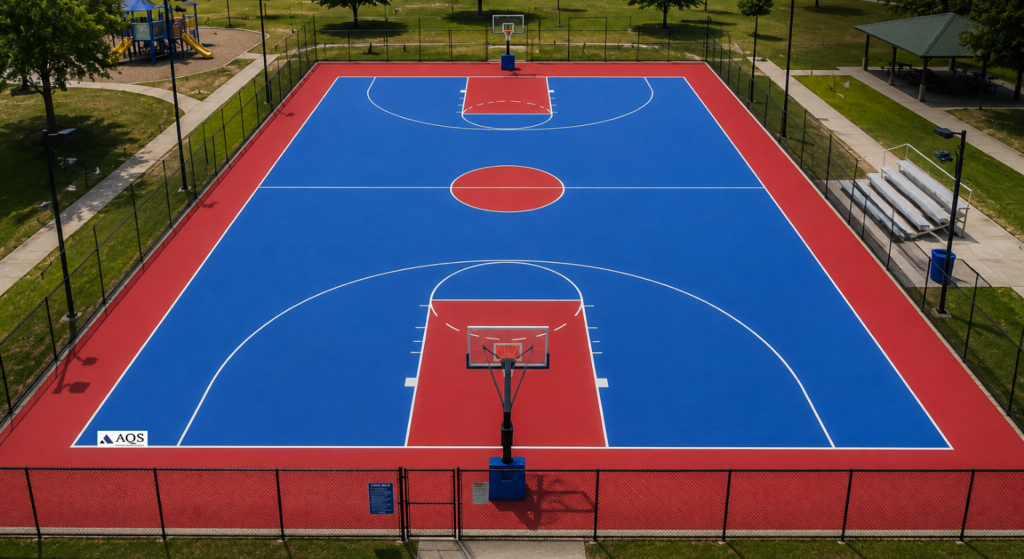
International basketball courts maintain standardized dimensions of 28 meters length and 15 meters width, covering 420 square meters total playing area. Indian educational institutions typically follow these FIBA standards for competitive play. However, recreational courts often adapt dimensions to available space ranging from 20×12 meters minimum practical size.
Professional courts require 2-3 meter safety buffer zones around perimeter boundaries. This additional space accommodates spectator seating and emergency movement passages. Total facility footprint for a standard court extends to approximately 32×19 meters including buffer zones and supporting infrastructure installations.
Current Flooring Material Prices for Basketball Courts in India (2026)
What Are the Primary Flooring Options Available in Indian Markets?
Basketball court flooring represents the most significant material investment in court construction. The primary flooring options available in the Indian market offer varying durability, maintenance requirements, and aesthetic appeal. Prices fluctuate based on quality grades, supplier location, and material sourcing channels.
Upgrade Your Sports Court Today
Get premium synthetic acrylic flooring designed for durability, grip, and performance.
Get Free ConsultationHow Much Does Hardwood Flooring Cost for Basketball Courts?
Hardwood flooring dominates premium basketball court installations across India’s metro cities. Manufactured from imported maple or local teak variants, hardwood costs range from ₹3,500 to ₹6,500 per square meter. Installation complexity requires specialized craftsmen, adding labor expenses separately. Hardwood maintains superior playing performance with excellent ball bounce characteristics. The material resists wear from constant player movement and heavy equipment traffic. For a standard 28×15 meter court (420 sqm), hardwood investment reaches ₹14,70,000 to ₹27,30,000 excluding installation labor.
Is Synthetic Rubber Flooring Suitable for Indian Climate Conditions?
Synthetic rubber flooring has gained significant popularity in budget-conscious projects across tier-2 and tier-3 Indian cities. Rubber court materials cost between ₹1,800 and ₹3,200 per square meter. This economical option provides adequate shock absorption and weather resistance. Synthetic surfaces require minimal maintenance compared to wood alternatives. School and college authorities prefer rubber courts due to reduced long-term maintenance budgets. A 420 square meter court requires ₹7,56,000 to ₹13,44,000 in rubber material investment, making it accessible for institutional projects.
Why Do Budget Projects Choose Concrete Flooring Despite Performance Limitations?
Polished concrete surfaces represent the most economical basketball court material option. Concrete flooring costs merely ₹600 to ₹1,200 per square meter. Basic concrete courts serve residential and informal recreational settings effectively. However, concrete offers poor shock absorption, increasing player injury risks. Professional facilities avoid concrete due to inferior playing conditions. A 420 square meter concrete court costs only ₹2,52,000 to ₹5,04,000 minimum, suitable only for practice or recreational use.
Key Components Affecting Basketball Court Material Cost Structure
How Important Is Proper Subfloor Preparation for Court Longevity?
Proper subfloor preparation determines basketball court longevity and safety performance significantly. Concrete base layers require portland cement costing ₹8,000-₹12,000 per cubic meter for quality foundation establishment. Aggregate materials including sand and gravel cost approximately ₹1,500-₹2,500 per ton for adequate base composition. Foundation thickness demands 100-150mm of reinforced concrete minimum to support playing loads. Inadequate subfloor leads to surface cracks, water seepage, and accelerated deterioration within 2-3 years of operation. For a 420 square meter court, subfloor preparation averages ₹5,00,000 to ₹8,00,000 investment.
What Role Do Waterproofing Membranes Play in Court Protection?
Waterproofing membranes protect underground moisture from damaging upper flooring layers effectively. Membrane application costs range from ₹400 to ₹800 per square meter depending on quality grades selected. Quality membranes extend court lifespan by preventing water-related degradation in monsoon-prone regions. Installation requires specialized equipment and experienced technicians across Indian construction regions. A complete court waterproofing costs ₹1,68,000 to ₹3,36,000 for 420 square meters coverage, protecting the ₹50-70 lakh flooring investment underneath.
How Does Court Paint Selection Affect Playing Performance?
Acrylic court paint systems provide professional-grade surface finishing and aesthetic appeal simultaneously. Acrylic paint costs approximately ₹150 to ₹350 per square meter for two coats application ensuring proper coverage. UV-resistant formulations protect court markings from sun damage across India’s intense climate zones. Paint selection impacts long-term maintenance frequency and playing characteristics significantly. A complete court painting costs ₹63,000 to ₹1,47,000 for proper professional-grade application across 420 square meters.
What’s the Importance of Precise Court Line Markings?
Court line marking materials demand precision application for accurate game regulations compliance absolutely. Thermoplastic line marking systems cost ₹200 to ₹400 per 100 meters of playing lines. Proper line markings ensure competitive standards compliance for tournaments and official matches across Indian sports facilities. Reflective markings improve visibility in outdoor and partially covered court installations significantly. A standard court requires approximately 280-300 meters of line markings, costing ₹56,000 to ₹1,20,000 for professional-grade installation.
Which Perimeter Infrastructure Elements Ensure Court Safety?
Perimeter fencing materials provide safety and containment around basketball courts effectively. Galvanized steel fencing costs between ₹3,000 and ₹5,000 per linear meter for quality installation. Mesh fencing prevents stray balls and restricts unauthorized access to playing areas. Proper fencing enhances court security and maintains neighborhood relations substantially. A court perimeter of approximately 86 meters requires ₹2,58,000 to ₹4,30,000 in fencing materials and installation.
How Critical Is Proper Drainage System Installation?
Drainage systems prevent water accumulation affecting playing surfaces catastrophically. Drainage material installation costs ₹80 to ₹150 per square meter for comprehensive water management solutions. Effective drainage becomes critical in Indian monsoon regions where water management proves essential for court preservation. Poorly designed drainage systems cause surface damage and expensive repairs within months. A 420 square meter court requires ₹33,600 to ₹63,000 in drainage system investment for proper water flow management.
What’s the Impact of Lighting Systems on Court Functionality?
Lighting fixtures transform outdoor courts into all-weather facilities enabling evening and night play. LED lighting systems cost ₹25,000 to ₹50,000 per court depending on coverage area and intensity requirements. Modern LED solutions reduce electricity consumption by 70% compared to traditional lighting systems. Proper illumination extends usable hours and increases facility revenue potential substantially through extended operational schedules.
Basketball Court Material Cost Comparison Table (2026 India)
| Material Type | Cost Per Sq. Meter (₹) | Durability (Years) | Maintenance Level | Installation Complexity | Bounce Performance |
| Hardwood Flooring | 3,500-6,500 | 15-20 | High | Complex | Excellent |
| Synthetic Rubber | 1,800-3,200 | 8-12 | Medium | Moderate | Good |
| Polished Concrete | 600-1,200 | 5-7 | High | Simple | Poor |
| Vinyl Composite | 2,000-3,800 | 10-15 | Medium | Moderate | Very Good |
| Asphalt Surface | 1,200-2,000 | 6-10 | High | Simple | Average |
| Modular Plastic Tiles | 2,500-4,500 | 12-18 | Low | Easy | Good |
Complete Material Cost Breakdown for 2,500 Sq. Meter Court
A comprehensive basketball court construction requires detailed material planning and cost allocation. This breakdown represents realistic 2026 pricing across major Indian metropolitan regions.
Subfloor and Foundation: Concrete materials and preparation cost approximately ₹3,75,000 to ₹4,50,000 for average court dimensions. Waterproofing membrane installation adds ₹1,00,000 to ₹2,00,000 depending on membrane quality selection.
Flooring Surface: Synthetic rubber flooring at mid-range quality costs ₹45,00,000 to ₹80,00,000 for 2,500 square meters. Installation labor adds separate charges typically ranging ₹10,00,000 to ₹15,00,000.
Surface Finishing: Acrylic paint application across entire court surface costs ₹3,75,000 to ₹8,75,000. Court line marking with thermoplastic materials costs ₹1,50,000 to ₹3,00,000 for professional-grade installation.
Perimeter Infrastructure: Fencing installation for perimeter protection costs ₹3,00,000 to ₹6,00,000 depending on fence type and court dimensions. Drainage systems require ₹2,00,000 to ₹3,75,000 investment for proper water management.
Lighting Systems: LED lighting installation for outdoor courts costs ₹4,00,000 to ₹8,00,000 for adequate coverage and professional-grade illumination throughout playing areas.
Total Estimated Material Cost: ₹65,00,000 to ₹1,20,00,000 for complete basketball court construction with synthetic rubber flooring across major Indian cities in 2026.
Information Table: Material Specifications and Performance Metrics
| Material Characteristic | Hardwood | Rubber | Concrete | Vinyl Composite |
| Impact Resistance | Very High | High | Low | High |
| Thermal Stability | Moderate | High | Very High | High |
| Water Resistance | Low | High | Very High | Very High |
| Installation Time | 10-14 days | 5-7 days | 3-4 days | 4-6 days |
| Cost per Square Meter | ₹3,500-₹6,500 | ₹1,800-₹3,200 | ₹600-₹1,200 | ₹2,000-₹3,800 |
| Maintenance Frequency | Monthly | Quarterly | Monthly | Quarterly |
| Environmental Impact | High | Medium | Low | High |
Case Study: Municipal Sports Complex Court Construction in Bangalore
The Bangalore Municipal Corporation approved a basketball court construction project covering 2,500 square meters in the Eastern zone during 2025. Project authorities allocated ₹90,00,000 initial budget for complete facility development including material procurement and installation.
Contractors selected synthetic rubber flooring after comparative analysis of available options. Rubber material cost ₹55,00,000 for total court surface coverage. Foundation preparation consumed ₹5,00,000 including concrete, waterproofing, and drainage installation. Perimeter fencing, electrical systems, and finishing materials totaled ₹25,00,000.
Final project completion occurred within six months with material cost variations of only 8% from estimated budget. The facility accommodates approximately 800 daily users within three months of operational launch. Maintenance costs averaged ₹15,000 monthly, proving budget projections accurate. Municipal authorities reported 92% cost efficiency compared to national average, demonstrating proper material selection importance.
Community feedback highlighted excellent playing surface quality and durability characteristics. The court successfully hosted regional basketball tournaments attracting 5,000+ spectators. Investment returns through facility rental revenue achieved break-even status within 14 months of operation, validating initial material cost decisions.
Deep Information: Material Selection Strategy for Indian Climate
Which Materials Perform Best Under India’s Extreme Climate Conditions?
Basketball court materials must withstand India’s diverse climatic challenges ranging from intense UV radiation to heavy monsoon rainfall effectively. Material selection requires balancing performance, cost, and climate resilience factors comprehensively for long-term success. Synthetic rubber and vinyl composite materials demonstrate superior resistance to Indian climate extremes consistently. These materials maintain performance consistency across temperature variations from 5°C to 50°C throughout seasonal cycles. Rubber’s thermal stability prevents surface cracking and dimensional changes common in concrete courts. Monsoon protection proves excellent with inherent water resistance requiring minimal maintenance compared to alternatives.
Why Do Professional Facilities Avoid Concrete Despite Lower Initial Cost?
Hardwood flooring demands climate-controlled environments rarely available in Indian construction settings realistically. Wood absorbs moisture expanding and contracting with seasonal humidity changes consistently. Professional hardwood courts require controlled temperature and humidity maintenance adding operational costs substantially. Premium facilities in metro cities justify these expenses for tournament hosting capability exclusively. Concrete surfaces develop micro-cracks during Indian monsoon seasons when water penetrates surface layers systematically. Freeze-thaw cycles in hill stations accelerate concrete deterioration rapidly within 2-3 seasons. Asphalt surfaces soften during summer heat exceeding 45°C becoming hazardous for playing dangerously. Synthetic materials prove clearly superior for Indian subcontinental climate compatibility definitively.
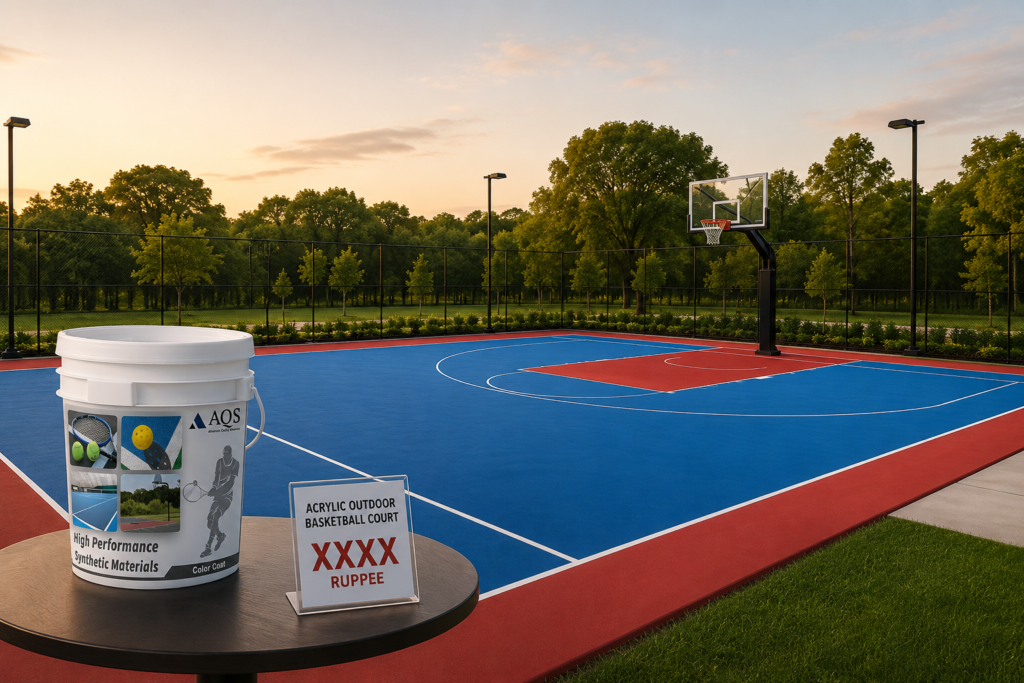
Upgrade Your Sports Court Today
Get premium synthetic acrylic flooring designed for durability, grip, and performance.
Get Free ConsultationAdvanced Considerations Affecting Material Cost
How Can Procurement Timing Reduce Basketball Court Material Costs?
Procurement timing influences material pricing significantly across Indian markets fundamentally. Advance material ordering during off-season periods saves 10-15% compared to peak construction months. Direct supplier relationships reduce intermediary costs improving budget efficiency substantially. Bulk purchasing for multiple court projects justifies wholesale pricing negotiations with material suppliers effectively. Planning court construction during monsoon season when contractor demand reduces allows negotiating better labor rates. Summer advance ordering ensures material availability without rush charges or supply constraints.
What Role Do Quality Certifications Play in Material Selection?
Quality certification requirements add cost but ensure safety compliance legally. ISI-certified materials cost 5-8% premium compared to uncertified alternatives but guarantee performance standards. International certifications like IAAF compliance add 12-15% to material expenses but enable tournament hosting capability. Schools and competitive facilities must select certified materials meeting tournament regulations and safety standards absolutely. Uncertified materials risk liability and disqualification from official competitions across Indian sports organizations.
How Does Seasonal Construction Timing Affect Total Project Cost?
Installation timing affects total material cost through labor availability fluctuations significantly. Monsoon season projects require special protection measures increasing costs by 15-20% substantially. Summer months provide optimal construction conditions reducing installation expenses considerably. Winter season offers moderate costs with manageable working conditions for specialized installation tasks. Project scheduling around seasonal factors improves cost efficiency significantly through better labor availability and reduced overhead protection measures.
Conclusion
Basketball court material selection profoundly impacts project success determining facility longevity, playing quality, and maintenance expenses throughout operational lifespan. Thorough cost analysis coupled with climate consideration ensures optimal decision-making for Indian construction environments. Synthetic Acrylic flooring emerges as a superior choice for most applications balancing cost-effectiveness with performance excellence. Direct supplier engagement and advance planning reduce material costs by 10-15% improving project profitability. Professional consultation with court construction specialists validates material selection ensuring compliance with regulations and safety standards. Investment in quality materials ensures decades of reliable performance providing excellent returns through enhanced facility utilization and community satisfaction.
Frequently Asked Questions
Synthetic Acrylic flooring provides optimal balance between affordability (₹1,200-₹2,200/sqm), durability (8-12 years), and low maintenance requirements for educational institutions.
Complete professional court construction averages ₹65,00,000 to ₹1,20,00,000 in 2026 depending on material quality, location, and additional amenities selection.
Hardwood flooring offers maximum durability lasting 15-20 years with proper maintenance, though initial investment costs ₹3,500-₹6,500 per square meter.
Yes, synthetic rubber and vinyl composite materials withstand monsoon conditions excellently, though proper drainage systems and regular maintenance prove essential.
Synthetic rubber courts last 8-12 years, concrete surfaces require replacement every 5-7 years, while quality hardwood courts function for 15-20 years depending on usage intensity.
Polished concrete surfaces cost ₹600-₹1,200 per square meter minimally, but synthetic rubber at ₹1,800-₹3,200 per square meter provides significantly better playing quality justifying modest additional investment.