
Tennis court flooring is the key to a high-quality playing surface for safety, durability, and performance. But improper tennis court installation hosts a lot of problems that will affect the longevity and usability of the court. Whether it’s cracks, poor drainage, uneven surfaces, or premature wear and tear, a poorly installed tennis court can become a costly mistake for owners. At AQS, we specialize in acrylic synthetic flooring for outdoor tennis courts.
Choosing the right tennis court flooring and having it installed by experienced professionals can prevent all this. This blog looks at the common problems caused by improper installation of a tennis court and how to avoid it. It also explains why working with local tennis court installation companies is key to long-term performance and cost savings.
Proper Tennis Court Flooring Installation
The success of any outdoor tennis court flooring material comes installation right from the start. A court that’s not put together properly can be a safety risk, play poorly. key points that make all the difference in a proper tennis court installation:
- Getting the Base Right: If you don’t have a solid, stable base down, you can kiss all that hard work in the acrylic layer’s goodbye. Even the tiniest bit of unevenness, a bit of dust or a crack in the base can come back to haunt you with major flooring failures down the line.
- ITF-Approved Court Dimensions: Getting the dimensions right, you need to use the ITF-approved measurements. Accurate marking is also super important to keep things looking the way they should on a professional court.
- Right Tennis Court Flooring: The good stuff withstands UV exposure, temperature changes and even the heaviest foot traffic. And if you want to put a cushion or non-cushion system in, that’s a good idea too to keep players comfy and cut down on maintenance.
- Draining Like a Pro: If the court gets too much water sitting on it, you’re going to have a real problem on your hands. A proper slope and drainage system keeps the surface from weakening over time and prevents water from sticking around. Very important.
- Application of Acrylic Coatings: The experts know that getting the layers right is not just about laying acrylic down. It’s about doing it, carefully with the right mix of liquid and solid.
A properly installed court gives players a top-notch experience – they’ve got good traction; the ball bounces the way it should.
Upgrade Your Sports Court Today
Get premium synthetic acrylic flooring designed for durability, grip, and performance.
Get Free ConsultationWhy does tennis court flooring fail?
If tennis court construction companies don’t follow industry standards, various problems will arise, affecting the court’s use and increasing repair costs. Here are some of the common ones:
| Problem | Cause | Impact on Court |
|---|---|---|
| Cracking | Poor base compaction, no expansion joints | Trip hazards, surface breakage |
| Water Accumulation | Bad drainage slope | Slippery court, algae growth |
| Uneven Surface | Uneven leveling, inconsistent coating | Poor ball bounce |
| Premature Wear | Low-quality materials, poor acrylic bonding | Frequent resurfacing needed |
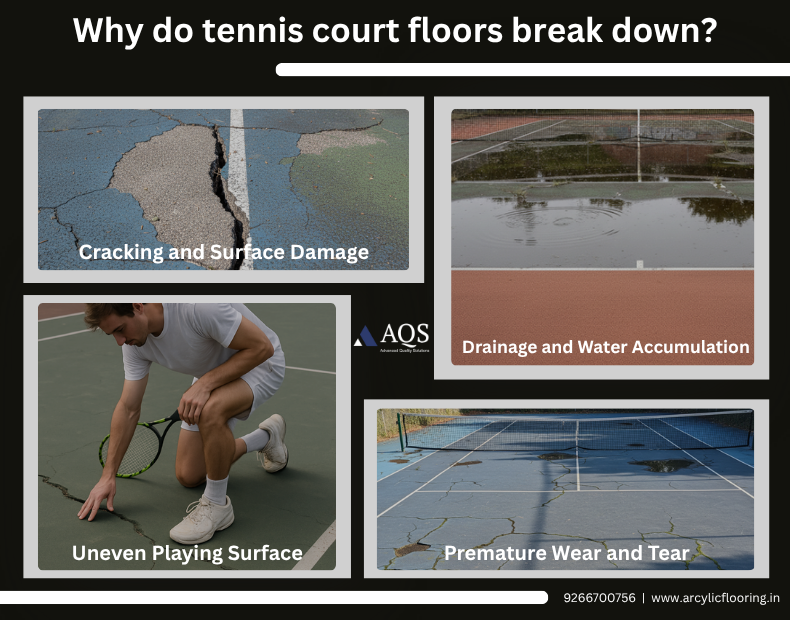
Cracking and Surface Damage
You’ll notice cracking all over the place, and it’s a real pain to deal with one of the most obvious signs a tennis court floor is on the way out, often because the prep work was a disaster or the weather had other plans.
- Base Compacted Not Right:
If the base of the court wasn’t properly stick down, it shifts under all the weight and pressure, leading to uneven stuff and these unsightly cracks over time that are just hard to ignore.
- No Expansion Joints Were Used:
Without some space to breathe, when the temperature changes and the surface wants to expand or contract, it’s got nowhere to go and ends up buckling or cracking as a result.
- Flooring Material is a Cheap:
Using flooring just means it’s going to fall apart way faster under the sun and from all the heavy use so you get a surface that fails long before it should.
- The Weather is Just Too Much:
When you’ve got high heat, torrential rains, and massive temperature changes all coming at you in a row, the surface gets worn down faster until it starts to crack and crumble underfoot.
These cracks are ugly enough on their own, but they also make the court a safety risk because of the increased risk of tripping.
Bad Drainage and Water Accumulation
- Bad drainage causes standing water which erodes the surface creating rough patches and uneven texture that affects player movement.
- Water retention creates slippery zones which increases chances of slips, falls and player injuries especially during fast rallies.
- Continuous moisture leads to mold and algae growth making the court look dirty and compromising hygiene and safety.
- Over time trapped water weakens the acrylic system causing faster deterioration and increasing resurfacing and repair costs.
Uneven Playing Surface
An uneven court will kill the game. Common causes are:
- Uneven base preparation creates dips, bumps and low spots that disrupts the natural flow of the game. When the ground is not levelled properly the acrylic layers settle unevenly and causes long term performance issues.
- Using low-quality tennis court flooring material results in inconsistent texture and patchy grip which makes the surface unpredictable for players. Premium acrylic systems ensure uniform density, correct particle size and consistent ball response across the entire court.
- Poor finishing techniques results to layers being applied at different thicknesses creating visible and invisible uneven patches. These variations directly affects ball bounce, speed and player movement reducing the overall playing quality.
- An uneven tennis court disrupts ball bounce causing unpredictable deflections and inconsistent play which frustrates players and affects match fairness. Smooth level surfaces is crucial for accurate shots, better rallies and professional level gameplay.
An uneven tennis court surface affects ball bounce so players can’t anticipate shots accurately, affecting overall gameplay.
Premature Wear and Tear
A poorly installed court will wear out faster than a professionally built one. Signs of premature wear are:
- Fading of color due to sunlight without UV resistant coatings continuous exposure to harsh UV rays breaks down low grade acrylic pigments and the surface loses its color much earlier than expected.
- Acrylic coatings peel because of poor bonding with the base layer if the base is not primed, cleaned or levelled properly the acrylic layers fail to adhere and starts to peel or flake.
- Loss of traction that makes fast movements unsafe for players improper mixing ratios, uneven application or low quality materials can compromise the slip resistant texture.
- Bubbling caused by trapped moisture under the flooring material when the base layer is not dried, sealed or tested for moisture water vapor gets trapped beneath the acrylic surface and forms bubbles or blisters.
- Surface wear down faster degradation means more maintenance and resurfacing costs a poorly installed court will wear out faster, more repairs, recoating or resurfacing.
Premature wear and tear mean more maintenance and more resurfacing, more costs.
3. How to avoid tennis court cracks?
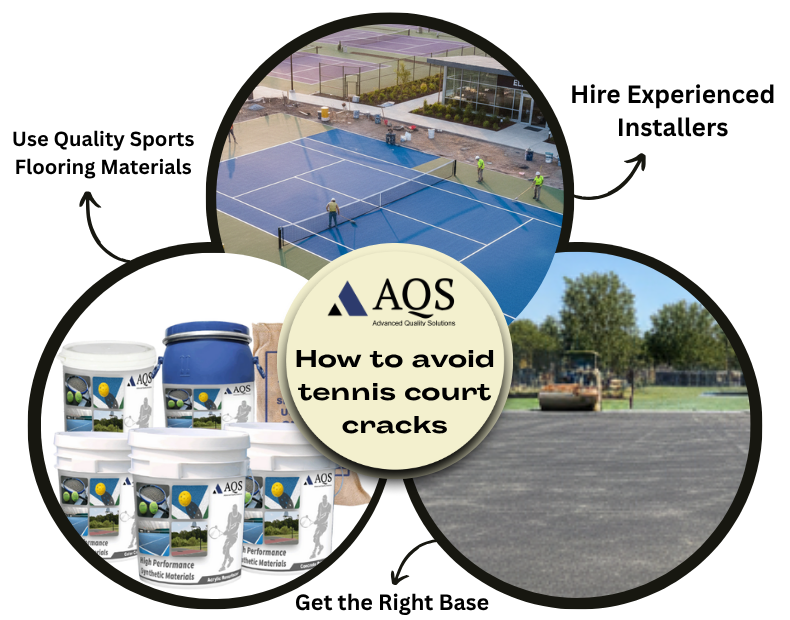
So, to avoid costly repairs and a load of other problems, it’s key to get the tennis court installation right in the first place by hiring one of the top tennis court installation companies out there. Here’s how to do it:
Hire Experienced Professionals like AQS
If you want a top-notch tennis court, you need to go for a company with loads of experience in laying outdoor tennis courts. Specifically, look for ones who:
- Make sure they only work with the top-notch, ITF-approved synthetic acrylic materials that can handle the Indian climate. Don’t go for standard-grade materials as they just won’t give you the consistent bounce, color retention, and long-term durability you’re after.
- Check if the contractor can fix cracks properly, lay the court at the right slope for good drainage, and apply each layer of acrylic to the right thickness. If they can do all that, you’ll be avoiding surface failures, peeling and uneven bounce for years to come.
- See if they’ve done a few court projects for schools, clubs and academies and what the feedback has been like. Look for real photos of their work to get a proper idea of their quality and trustworthiness.
Use Quality Sports Flooring Materials
Investing in the best tennis court flooring materials will pay you back in the long run. High-quality acrylic coatings give you:
- Better acrylic coatings that are made with UV-stable pigments which stop the court from fading, chalking or breaking down under the sun. That way, it’ll stay looking as good as new for years to come.
- They’ve got a superior texture that keeps the court looking like new for years to come and means you can perform at your best without worrying about slipping or uneven bounce.
- Advanced acrylic systems give you a sealed surface that keeps the moisture out which means you don’t get cracking in the base layer and all the associated costs it brings.
Get the Right Base
The base of your tennis court is the key to its stability and that’s what you need to focus on. Here’s how to do it:
- Clearing out weak soil and making sure it’s strong and solid with a good bit of compaction give a solid, load-bearing base and stop future issues like sinking or cracking.
- A good drainage system that gets rid of water quickly so it doesn’t damage the layers will save long-term maintenance costs and extend the life of the whole court.
- Using multiple layers of graded acrylic resurface, cushion coats, color coats give a strong, even playing surface that will last the test of time and stay at its best.
How to Maintain a Tennis Court?
Even an installed acrylic tennis court needs maintenance to perform at its best. These regular tasks will extend the life of the court and keep it safe to play on.
- Clean debris and water regularly: Sweep and remove leaves, dirt and standing water regularly to prevent surface discolouration, algae growth and slippery patches. Keeping the surface clean also ensures consistent ball bounce and reduces wear on the acrylic layers.
- Resurface when needed: Over time traffic and weather will wear down the texture and color of the court. Resurfacing on time will restore grip, appearance and performance – bring the court back to its fresh playable state.
- Check for cracks and repair immediately: Small cracks can quickly spread due to heat, moisture and ground movement. Repair early to prevent structural damage, water seepage and damage to the layers beneath and save yourself from costly future renovations.
What is the Cost of Tennis Court Installation?
Tennis court flooring: Many owners look for cheap options, but cutting corners will cost more in the long run. Knowing the synthetic tennis court cost and investing in expert installation will save you money in the long run. Here are the cost factors:
| Component | Avg Cost (₹) | Notes |
|---|---|---|
| Civil Base (Concrete/Asphalt) | ₹1–1.5 Lakhs | Depends on soil & thickness |
| Acrylic Layer System | ₹5–6 Lakhs | 5-layer/8-layer system |
Upgrade Your Sports Court Today
Get premium synthetic acrylic flooring designed for durability, grip, and performance.
Get Free ConsultationDoing it right from the start will prevent the need for frequent repairs and resurfacing, which will be cost-effective in the long run.
Conclusion
Improper installation of tennis court flooring can cause a lot of problems that affect performance, safety, and durability. From cracks and water damage to uneven surfaces and fading, these problems are costly to fix. By hiring professional tennis court construction companies and using high-quality tennis floor material, owners can have long-lasting and high-performance courts.
For top-performance outdoor tennis court flooring, AQS offers premium tennis court flooring material. Contact AQS today for your tennis court flooring needs.
Frequently Asked Questions
Acrylic flooring is the preferred choice for tennis court flooring because of its durability, all-weather performance, traction, and low maintenance.
A tennis court is 23.77 meters (78 feet) in length and 8.23 meters (27 feet) for singles or 10.97 meters (36 feet) for doubles.
Clean the surface, fill the cracks, apply resurfacing layers with synthetic acrylic tennis court flooring, repaint the faded lines, and ensure proper drainage to prevent further damage and restore playability.
Professional courts follow the standard tennis court size, but recreational or practice courts may vary depending on the space available, purpose, and specific installation requirements.
A tennis court should be resurfaced every 4-8 years, depending on the weather, usage, and maintenance, to keep it smooth, fractioned, and durable.


Comments are closed.