Table of contents
- What Does Basketball Court Cost Actually Include?
- Why Basketball Court Cost Varies from Project to Project
- Standard Basketball Court Size and Cost Impact
- Why a Strong Base Saves Money Over Time
- Basketball Court Surface Materials and Their Cost Effect
- Indoor vs Outdoor Basketball Court Cost Differences
- The Role of Basketball Court Builders in Cost Control
- Cheap Builders vs Professional Basketball Court Builders
- How Long Does a Basketball Court Last?
- Common Mistakes That Increase Basketball Court Cost
- How to Reduce Basketball Court Cost Without Compromising Quality
- Residential, School, and Academy Court Cost Differences
- Climate Impact on Basketball Court Cost
- Long-Term Cost vs Initial Cost
- Final Thoughts
- Frequently Asked Questions
When planning a basketball court, the first question that comes to mind is simple but important: what is the basketball court cost? Whether the project is for a school, residential complex, sports academy, or public park, understanding the cost structure helps avoid budget surprises and construction mistakes. Basketball court cost is not a fixed number. It depends on surface materials, base construction, location, and the experience of basketball court builders. A well-planned court costs more upfront but saves money in the long run through durability and low maintenance.
What Does Basketball Court Cost Actually Include?
Basketball court cost refers to the total expense required to build a playable and safe court from the ground up. It includes everything from land preparation to the final surface marking. The cost typically covers site preparation, base construction, surface material application, labor, and court line markings. Additional features such as fencing, lighting, or seating are usually calculated separately and can increase the final budget. Understanding what is included helps compare quotes from different basketball court builders more accurately.
Why Basketball Court Cost Varies from Project to Project
No two basketball court projects are exactly the same. This is why basketball court cost can vary widely even for courts of similar size. The biggest reasons for cost variation are surface material quality, base thickness, drainage requirements, local climate conditions, and workmanship quality. Experienced basketball court builders price projects differently because they focus on long-term performance rather than short-term savings. Cheaper construction often leads to cracks, surface failure, and higher repair costs later.
Upgrade Your Sports Court Today
Get premium synthetic acrylic flooring designed for durability, grip, and performance.
Get Free ConsultationThe Importance of Early Planning
Early planning plays a major role in controlling basketball court cost. Decisions made before construction begins determine how much material is used and how complex the installation will be. Planning includes deciding whether the court will be indoor or outdoor, how often it will be used, and what level of play it is intended for. These factors guide material selection and construction methods. Without planning, projects often face rework, delays, and unexpected expenses.
Standard Basketball Court Size and Cost Impact
A standard basketball court has fixed playing dimensions, but the total construction area includes additional safety run-off space. This extra area increases material usage and labor requirements. Larger courts require more base material, more surface coating, and more installation time. As a result, basketball court cost rises directly with total area. Choosing the correct size for the intended use helps control unnecessary expenses.
Transform Your Sports Facility Today!
Contact us for high-quality synthetic sports flooring material and elevate your space!
Base Construction: The Foundation of Basketball Court Cost
Base construction is the most critical and often the most expensive part of building a basketball court. It determines how long the surface will last and how well it performs. Base work involves excavation, leveling, compaction, and laying a concrete or asphalt base. A properly built base prevents water accumulation, surface cracks, and uneven play. Professional basketball court builders allocate a significant portion of the budget to base construction because it directly affects durability.
Why a Strong Base Saves Money Over Time
A weak base may reduce initial basketball court cost, but it increases maintenance and repair expenses later. Cracks in the base eventually reflect on the surface, leading to peeling and uneven bounce. A strong base extends the life of the playing surface and reduces the frequency of resurfacing. This makes the total lifecycle cost much lower even if the initial investment is higher. Experienced basketball court builders never compromise on base quality.
Basketball Court Surface Materials and Their Cost Effect
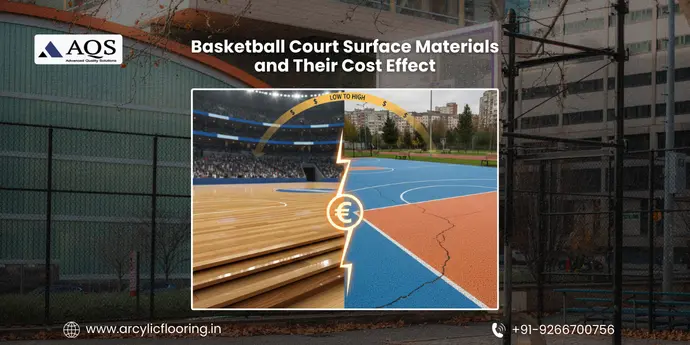
Surface material selection has the greatest influence on basketball court cost. Different materials offer different levels of performance, comfort, and durability. Acrylic sports flooring is the most widely used surface for outdoor basketball courts. It provides consistent ball bounce, good grip, and excellent weather resistance. Acrylic surfaces are also low maintenance, which helps control long-term costs. Concrete should only be used as a base and not as the final playing surface. Exposed concrete is hard on joints, slippery when wet, and prone to cracking. Indoor courts sometimes use synthetic or cushioned flooring systems. These surfaces offer comfort but increase installation and material costs.
Indoor vs Outdoor Basketball Court Cost Differences
Outdoor basketball courts generally have a lower construction cost because they do not require roofing or enclosed structures. However, outdoor courts must use weather-resistant materials to withstand sunlight and rain. Indoor basketball courts are more expensive due to building construction, controlled environments, and specialized flooring. Indoor projects can cost significantly more than outdoor courts even with the same playing surface area. Choosing between indoor and outdoor construction has a major impact on basketball court cost.
Labor Cost and Installation Quality
Labor cost is not just about manpower. It reflects the skill and experience of the basketball court builders handling the project. Skilled installers ensure correct surface thickness, uniform texture, and proper curing time. Poor installation often leads to early surface failure even when good materials are used. Quality workmanship increases initial cost slightly but greatly improves surface life and performance.
The Role of Basketball Court Builders in Cost Control
Experienced basketball court builders play a key role in managing basketball court cost effectively. They help select suitable materials, plan drainage, and avoid construction errors. Good builders understand how different layers interact and how climate affects surface behavior. Their expertise reduces future repair needs and prevents unnecessary expenses. Choosing the right builder is as important as choosing the right material.
Cheap Builders vs Professional Basketball Court Builders
Cheap builders often focus on reducing upfront cost by using thinner layers, lower-quality materials, or rushed installation. These shortcuts usually lead to cracks, peeling, and uneven surfaces. Professional basketball court builders focus on durability, safety, and long-term performance. Their courts may cost more initially but deliver better value over time. The difference becomes clear after a few years of use.
Maintenance Cost After Construction
Maintenance contributes to the total basketball court cost over its lifespan. Well-constructed courts require minimal maintenance. Acrylic basketball courts generally need routine cleaning, minor crack repairs, and resurfacing after several years of heavy use. Maintenance costs remain predictable and manageable. Poorly built courts require frequent repairs, increasing long-term expenses.
How Long Does a Basketball Court Last?
The lifespan of a basketball court depends on construction quality and material selection. A professionally built acrylic court can last seven to ten years before resurfacing is needed. Courts built with poor base preparation or low-quality materials may show damage within two to three years. Builder expertise directly impacts longevity.
Common Mistakes That Increase Basketball Court Cost
Many projects exceed budget due to avoidable mistakes. Poor drainage planning leads to water damage. Weak base construction causes cracks. Low-quality materials fade or peel quickly. Hiring inexperienced basketball court builders often results in rework and higher repair costs. These mistakes increase total basketball court cost significantly.
How to Reduce Basketball Court Cost Without Compromising Quality
Cost control does not mean cutting corners. Choosing standard court dimensions, selecting acrylic flooring, and investing in a strong base are effective ways to manage cost. Working with experienced basketball court builders ensures that materials are used efficiently and installed correctly. Smart planning reduces long-term expenses.
Transform Your Sports Facility Today!
Contact us for high-quality synthetic sports flooring material and elevate your space!
Residential, School, and Academy Court Cost Differences
Residential basketball courts usually have lower usage and smaller size, resulting in lower basketball court cost. School courts require more durable surfaces due to regular use. Sports academies and clubs need high-performance surfaces capable of handling heavy daily usage. These courts have a higher initial cost but deliver long-term value. Usage level directly influences construction decisions.
Climate Impact on Basketball Court Cost
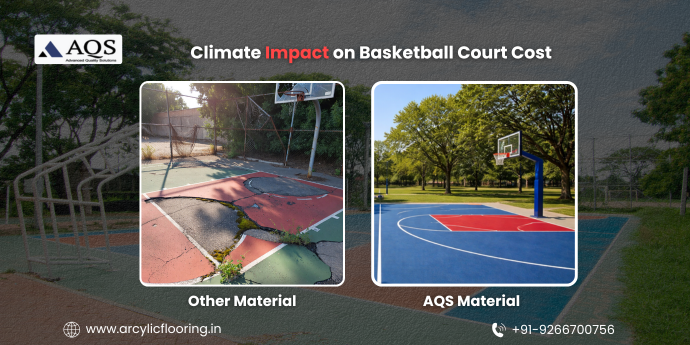
Climate plays an important role in surface selection. Hot regions require UV-resistant coatings. Rainy regions need better drainage and water-resistant materials. Ignoring climate conditions increases maintenance and resurfacing costs. Experienced basketball court builders select materials based on local weather patterns.
Long-Term Cost vs Initial Cost
Focusing only on initial basketball court cost can be misleading. A cheaper court may require frequent repairs and resurfacing, increasing total expense over time. A professionally built court with quality materials offers lower lifecycle cost, better performance, and longer service life. Long-term value should guide decision-making.
Final Thoughts
Basketball court cost is influenced by many factors, including base construction, surface material, climate, and the expertise of basketball court builders. It is not just a construction expense but a long-term investment. Careful planning, quality materials, and professional installation result in a court that performs well, stays safe, and requires minimal maintenance. Choosing experienced builders ensures consistent playability and long-term cost control. A well-built basketball court delivers value for years, making quality construction the smartest choice.
Frequently Asked Questions
The average basketball court cost depends on surface material, base construction, court size, and whether the court is indoor or outdoor.
Basketball court cost is most affected by base quality, surface material, drainage planning, and construction workmanship
Surface material impacts basketball court cost by influencing durability, maintenance frequency, and long-term performance.
Base construction increases basketball court cost because proper excavation, leveling, and concrete work are essential for surface stability and lifespan.
An indoor basketball court is more expensive than an outdoor court due to additional structural, roofing, and environmental control requirements.
Professional basketball court builders reduce long-term costs by ensuring correct base preparation, surface application, and drainage design.