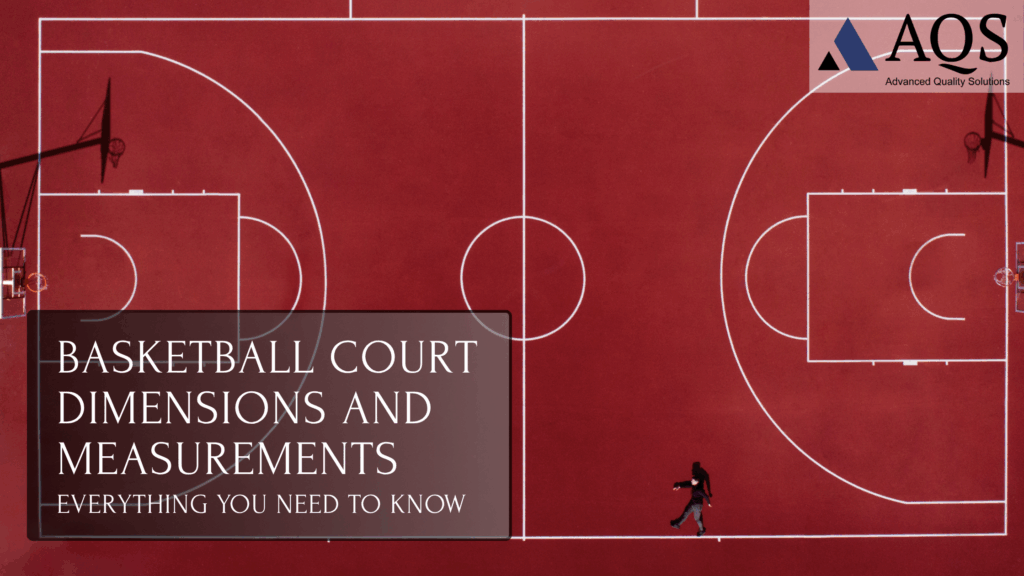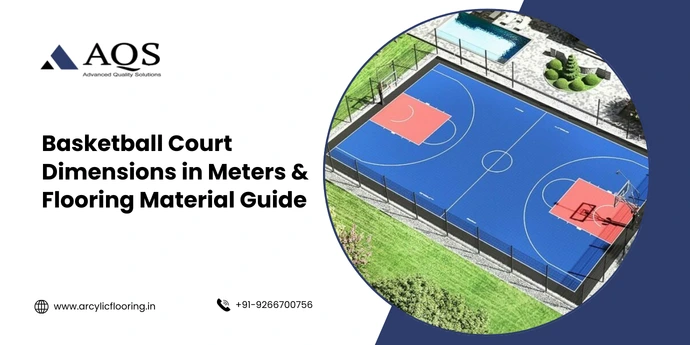
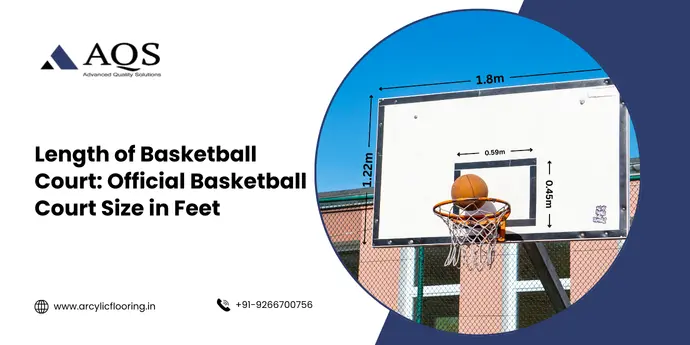
Understanding the length of basketball court is essential before designing, constructing, or resurfacing any basketball facility. Whether the project is for a school, academy, residential society, or professional arena, correct measurements ensure fair play, proper line markings, and optimal surface performance.
The basketball court size in feet directly affects gameplay speed, spacing, and player movement. Even minor deviations in court length or width can influence how the game flows. Inspired by the informative style of Arcylic Flooring, this detailed guide explains official dimensions, variations, construction considerations, and practical insights for accurate basketball court planning.
What Is the Official Length of Basketball Court?
The standard length of basketball court for professional play is 94 feet. This measurement is widely used in competitive leagues and institutional courts. In international formats, the court length is slightly different when measured in meters, but in most regions, especially where dimensions are referenced in feet, 94 feet remains the standard benchmark. The length runs from baseline to baseline, forming the rectangular playing surface along with the official width of 50 feet.
Basketball Court Size in Feet: Full Dimensions Overview
When discussing basketball court size in feet, it is important to understand the complete measurement, not just the length.
Upgrade Your Sports Court Today
Get premium synthetic acrylic flooring designed for durability, grip, and performance.
Get Free ConsultationA standard full-size basketball court measures:
- 94 feet in length
- 50 feet in width
These dimensions apply to professional and collegiate-level courts. High school courts may vary slightly, but many follow similar proportions. The total playing area is calculated by multiplying the length and width, resulting in 4,700 square feet of playing surface for a full-size court.
Half Court and Practice Court Dimensions
Not all projects require a full 94-foot court. Many schools, community centers, and residential complexes opt for half courts or practice courts to save space while maintaining functionality. A half court typically measures 47 feet in length and retains proportional width based on available space. While smaller in size, proper line marking and surface quality remain essential to ensure accurate play. Understanding the intended use of the court helps determine whether a full-length or half-length court is most suitable.
Why Accurate Court Length Matters
The length of basketball court influences player stamina, defensive spacing, and overall gameplay strategy. A shorter court speeds up the game and reduces transition distance, while a full-length court creates more room for tactical movement and structured plays. Accurate dimensions also ensure compliance with sports standards. Incorrect court length can lead to mismatched line markings, improper three-point arc placement, and non-standard key areas. From a construction perspective, precise measurement prevents costly rework and ensures correct placement of hoops, backboards, and boundary lines.
Key Markings Within the Basketball Court Size in Feet
The length of basketball court is divided into multiple functional areas that must align proportionally. The center line divides the court equally into two halves, each measuring 47 feet. The free throw line, three-point arc, and key area are placed according to standardized distances measured from the baselines and sidelines. These internal markings depend entirely on the accurate 94-foot court length. Even slight miscalculations can distort gameplay zones.
Outdoor vs Indoor Basketball Court Dimensions
The official basketball court size in feet remains the same for indoor and outdoor courts when built to professional standards. However, space constraints sometimes require modified dimensions in outdoor recreational courts. While recreational courts may adjust slightly in length or width, maintaining proportional layout ensures players experience consistent gameplay. Arcylic Flooring recommends adhering as closely as possible to official dimensions to maintain performance quality and avoid future reconstruction.
Construction Planning Based on Court Length
The length of basketball court directly affects material estimation and project budgeting. Flooring materials are calculated based on total square footage. A full-size 94-by-50-foot court requires proper base preparation, surface layering, and line marking across the entire 4,700 square feet. Base slope, drainage planning for outdoor courts, and expansion joints must align with court length to prevent surface cracking and water pooling. Professional surface providers such as Arcylic Flooring emphasize accurate base preparation before applying acrylic sports coatings. A correctly measured court ensures smooth application and long-term durability.
Transform Your Sports Facility Today!
Contact us for high-quality synthetic sports flooring material and elevate your space!
Impact of Court Size on Flooring Material
The basketball court size in feet influences the amount of synthetic acrylic flooring material required. Larger courts demand more resurfacer, color coats, and line marking paint. Surface uniformity across the entire length is critical for consistent ball bounce and player grip. Uneven surfaces over a 94-foot span can affect gameplay significantly. Using high-quality materials ensures durability across the full length of basketball court, especially in high-traffic areas near the key and baseline.
Space Requirements Around the Court
When planning construction, it is important to account for safety margins beyond the official playing dimensions. While the official length of basketball court is 94 feet, additional clearance space is recommended around the boundaries. This buffer zone allows players to move safely without risk of collision. Indoor arenas often include extra spacing behind baselines and sidelines to accommodate referees, benches, and media. Proper planning of total site area ensures the court functions efficiently within its surroundings.
Modifications for Youth and Recreational Play
Youth basketball courts may use shorter court lengths to match age-specific rules and physical capabilities. In such cases, the basketball court size in feet is scaled down proportionally. Despite reduced length, maintaining correct ratios between playing zones remains important for skill development and fair play. Recreational facilities sometimes customize court dimensions to fit available land, but maintaining consistent layout standards ensures better playing experience.
Why Standardization Matters in Modern Construction
Standardized court dimensions simplify maintenance, resurfacing, and line repainting in the future. When the length of basketball court aligns with official specifications, replacement of components becomes straightforward. For institutions investing in long-term infrastructure, following official basketball court size in feet ensures compatibility with league requirements and tournament hosting. Arcylic Flooring advocates for precise measurement, professional marking, and high-quality surface materials to ensure courts remain functional and compliant for years.
Common Mistakes in Court Dimension Planning
One of the most common errors in basketball court construction is miscalculating baseline-to-baseline length. Even minor measurement discrepancies can cause alignment problems in key areas and arcs. Another issue is ignoring expansion allowances in outdoor installations. Temperature changes can affect surface material across the full 94-foot span. Accurate surveying and professional installation prevent these issues and protect long-term investment.
The Role of Technology in Court Measurement
Modern construction uses laser measurement tools and digital layout systems to ensure exact basketball court size in feet. These technologies reduce human error and improve installation precision. Accurate layout ensures the length of basketball court remains consistent from one baseline to the other, supporting proper marking and surface layering.
Transform Your Sports Facility Today!
Contact us for high-quality synthetic sports flooring material and elevate your space!
Conclusion: Building with Precision and Performance
The length of basketball court is more than a simple measurement; it defines how the game is played. The official basketball court size in feet, 94 feet by 50 feet, establishes the framework for competitive and recreational basketball worldwide. Whether planning a full professional court or a scaled-down recreational facility, precise measurement ensures optimal performance, safety, and long-term durability. Working with experienced surface providers like Arcylic Flooring ensures that court dimensions align with professional standards while maintaining high-quality surface performance. Accurate design, correct layout, and durable materials together create a court that performs consistently season after season.
Frequently Asked Questions (FAQs)
The official length of a professional basketball court is 94 feet.
A full-size basketball court measures 94 feet long and 50 feet wide.
A half court is typically 47 feet in length.
The official length remains the same, though recreational outdoor courts may vary slightly.
A standard court covers approximately 4,700 square feet.
Precise dimensions ensure fair gameplay, proper line marking, and long-term surface durability.