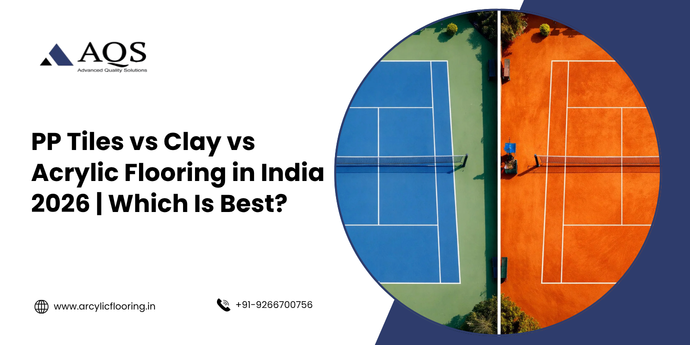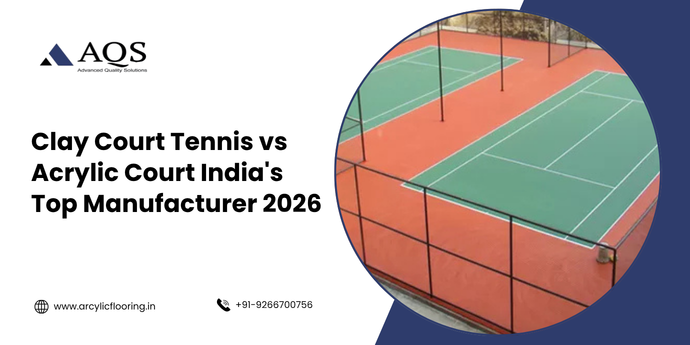
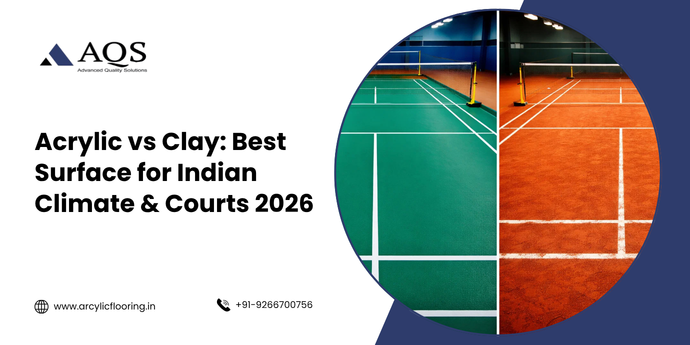
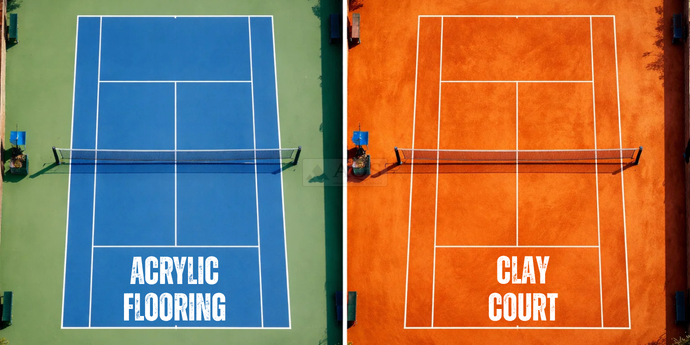
Acrylic surfaces (courts and flooring) are synthetic, multi-layer coating systems applied over concrete or asphalt. They offer UV resistance, fast drainage, consistent performance, and low maintenance – ideal for India’s harsh climate. Clay surfaces are natural, made from crushed stone or shale, offering slower ball speed and a softer feel but requiring daily watering, rolling, and sweeping. In India 2026, acrylic wins for sports courts, commercial spaces, and outdoor use due to weather resistance and lower long-term cost (₹80–₹250/sq ft). Clay remains preferred for elite tennis academies and traditional aesthetics but demands significantly higher maintenance investment.
Table of contents
- What Is the Acrylic vs Clay Debate in India?
- What Is an Acrylic Surface?
- What Is a Clay Surface?
- Acrylic vs Clay – Full Comparison Tabl e
- Acrylic vs Clay in India’s Climate: Zone-Wise Analysis
- Quick Decision Guide
- Cost Analysis: Acrylic vs Clay in India
- Types of Acrylic Systems Available in India 2026
- Frequently Asked Questions
- Conclusion
What Is the Acrylic vs Clay Debate in India?
India’s sports and flooring industry is growing at an unprecedented pace in 2026. Schools, housing societies, sports academies, and commercial establishments are all asking the same fundamental question: acrylic vs clay – which surface truly delivers value? The answer depends on climate, budget, usage frequency, and long-term maintenance capacity.
Acrylic surfaces dominate the modern market with their synthetic resilience and low upkeep. Clay surfaces carry the weight of tradition – beloved in European tennis and classic Indian architecture – but they struggle under India’s diverse climatic conditions. This guide breaks down every dimension of the acrylic vs clay comparison with updated 2026 data, real costs, and an honest verdict.
Did You Know?
India’s sports infrastructure sector grew by over 22% in 2025–26, driven by government investment in SAI (Sports Authority of India) centres and private academies. The majority of new court installations chose acrylic over clay.
What Is an Acrylic Surface?
An acrylic surface is a synthetic, multi-layer coating system applied over a prepared concrete or asphalt base. It consists of multiple functional layers – primer coat, resurfacer, base acrylic coats, cushion layer (optional), and colour top coat. These layers combine to create a flat, durable, UV-resistant playing or flooring surface engineered for consistent performance.
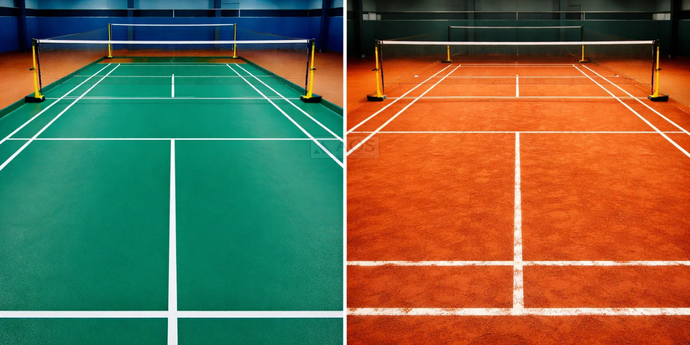
In India 2026, acrylic surfaces are used across tennis courts, basketball courts, badminton courts, multipurpose sports halls, pickleball courts, and even decorative home flooring. The surface is non-porous, which means rainwater drains off rapidly – a critical advantage during the Indian monsoon season.
What Is a Clay Surface?
A clay surface is a natural playing or flooring material made from crushed stone, brick, shale, or red clay. It is compacted and layered to create a porous, softer surface that absorbs impact more readily than hard courts. Famous at the French Open (Roland Garros), clay courts are beloved by tennis purists for encouraging longer rallies and rewarding tactical play.
Upgrade Your Sports Court Today
Get premium synthetic acrylic flooring designed for durability, grip, and performance.
Get Free ConsultationIn India, clay surfaces have traditionally appeared in older tennis clubs, garden pathways, and terracotta-style flooring. However, the maintenance burden of clay is severe – especially in India’s extreme monsoon and summer cycles. Clay requires daily watering for moisture retention, regular rolling for surface evenness, and immediate repair after rainfall damage.
Acrylic vs Clay – Full Comparison Table
This comprehensive comparison table evaluates both surfaces across the parameters that matter most to Indian buyers, facility managers, and sports academies in 2026.
| Parameter | 🔵 Acrylic | 🟤 Clay | Winner |
| Installation Cost (₹/sq ft) | ₹80 – ₹250 | ₹60 – ₹150 | Clay (upfront) |
| Long-Term Total Cost | Low – minimal maintenance | High – daily labour + repairs | Acrylic |
| Monsoon Performance | Drains fast, back in play quickly | Muddy, unusable for 12–48 hrs | Acrylic |
| Summer Performance (45°C+) | UV-stable, holds surface integrity | Cracks and becomes dusty/loose | Acrylic |
| Lifespan | 6–10 years | 3–5 years | Acrylic |
| Daily Maintenance | Minimal – periodic cleaning | Intensive – watering, rolling, sweeping | Acrylic |
| Joint Comfort | Moderate (better with cushion layer) | Excellent – softer impact | Clay |
| Ball Bounce Consistency | Very high – engineered surface | Variable – depends on moisture | Acrylic |
| Slip Resistance | High – textured non-slip finish | Moderate – risk when wet or dry | Acrylic |
| ITF / Regulatory Approval | Yes – certified for professional use | Yes – Category 1 slow surface | Tie |
| Environmental Impact | Synthetic – less eco-friendly | Natural – biodegradable | Clay |
| Customization | Wide – multiple colours, line markings | Limited – natural red/brown tones | Acrylic |
| Coastal/Humid Suitability | Excellent – does not absorb moisture | Poor – grows moss, algae in humidity | Acrylic |
| Best For | Schools, academies, societies, commercial | Elite training academies, traditional clubs | Acrylic (broader use) |
Acrylic vs Clay in India’s Climate: Zone-Wise Analysis
India’s climatic diversity – from the tropical humidity of Kerala to the extreme heat of Rajasthan and the heavy rainfall of the Northeast – makes surface selection a critical, region-specific decision. Acrylic surfaces demonstrate consistent performance across all these zones. Clay surfaces, however, show significant vulnerabilities that directly impact playability and cost.
North India (Delhi, Punjab, UP – Extreme Heat Summers)
Summer temperatures regularly cross 44°C in North India. Clay courts crack severely under this heat, requiring emergency watering and repair. Acrylic surfaces maintain structural integrity without cracking or loosening. Leading sports facilities in Delhi and Gurugram have switched from clay to acrylic specifically to manage summer court damage.
South India (Kerala, Tamil Nadu, Andhra – Tropical Humidity)
Coastal humidity and dual monsoon seasons make clay courts highly prone to moss growth, algae accumulation, and waterlogging. South Indian tennis clubs that maintain clay courts report spending 3–4x more on annual maintenance than facilities using acrylic. Acrylic surfaces dry rapidly and resist biological growth, making them the standard choice in Chennai, Bengaluru, and Kochi.
West India (Mumbai, Gujarat – Monsoon + Humidity)
Mumbai receives over 2,200mm of annual rainfall. Clay courts in Mumbai become functionally unusable for months during the monsoon season. Acrylic courts drain within 30–60 minutes post-rain and return to safe, playable condition rapidly. This represents a substantial revenue and utility advantage for commercial sports facilities.
Delhi Sports Academy Switches from Clay to Acrylic – Real Results (2024–2025)
A mid-sized sports academy in Gurugram, Haryana operated two clay tennis courts for six years. In 2024, the management conducted a cost-benefit review and decided to resurface both courts with premium acrylic systems.
Investment: ₹9.2 lakh for full acrylic resurfacing of both courts (cushion system, line marking, fencing repair). The academy recovered the full conversion cost within 18 months through increased court bookings, reduced maintenance labour, and elimination of clay repair contracts. Member satisfaction scores improved significantly as well-maintained, all-weather courts became available 340+ days per year.
Verdict from Academy Director: “We delayed this decision by four years. In hindsight, the acrylic conversion paid for itself faster than we expected. The courts look professional, drain quickly, and require almost no daily attention compared to what clay demanded from our groundskeeping team.”
Transform Your Sports Facility Today!
Contact us for high-quality synthetic sports flooring material and elevate your space!
Quick Decision Guide
Acrylic or Clay Based on Your Situation
Choose Acrylic If You…
- Run a school, society, or commercial sports facility in India. Need year-round playability regardless of weather. Have limited maintenance staff. Want a 10+ year low-maintenance surface. Are in a humid, coastal, or high-rainfall region.
Choose Clay If You…
- Operate a premium training academy focused on European-style clay court skills. Have dedicated daily maintenance staff. Are in a temperate climate with controlled facilities. Prioritise player joint health above all else. Have a strong preference for traditional aesthetics.
Cost Analysis: Acrylic vs Clay in India
Understanding the true cost of acrylic vs clay requires looking beyond installation. The real financial picture emerges only when you compare total cost of ownership over a 5–10 year horizon. Acrylic surfaces carry higher upfront costs but dramatically lower maintenance expenses, while clay courts often reverse this equation in a way that surprises buyers who focus only on installation prices.
| Cost Factor | 🔵 Acrylic (per court) | 🟤 Clay (per court) |
| Base Preparation | ₹1.5L – ₹2.5L (concrete/asphalt) | ₹80K – ₹1.2L (compacted base) |
| Surface Installation | ₹2.5L – ₹6L (basic to cushion) | ₹1L – ₹2.5L |
| Annual Maintenance | ₹30,000 – ₹60,000 | ₹2L – ₹4.5L |
| 5-Year Total Cost (2 courts) | ₹14L – ₹22L | ₹21L – ₹35L |
| Resurfacing Requirement | ₹1.5L – ₹3L at year 5–6 | Full rebuild ₹3L – ₹5L at year 3–4 |
Upgrade Your Sports Court Today
Get premium synthetic acrylic flooring designed for durability, grip, and performance.
Get Free ConsultationCosts are approximate estimates based on 2026 rates across North and South Indian metros. Final costs depend on court size, site condition, and contractor selection.
Types of Acrylic Systems Available in India 2026
Not all acrylic surfaces are equal. Indian buyers in 2026 can choose from three primary acrylic system types, each suited to different budgets and performance needs. Understanding these systems helps avoid overspending on premium features you do not need or underinvesting in a surface that fails prematurely.
1. Basic Acrylic System (₹80–₹120/sq ft)
The basic system includes primer, resurfacer coats, and two to three layers of acrylic colour coating. It provides a functional, durable playing surface suitable for recreational facilities, housing societies, and school courts. It lacks shock absorption but performs reliably in weather resistance and bounce consistency.
2. Cushion Acrylic System (₹120–₹180/sq ft)
The cushion system adds a rubberised layer beneath the acrylic topcoat. This significantly reduces joint impact – making it suitable for competitive academies, rehabilitation centres, and senior player facilities. The cushion layer bridges the comfort gap between acrylic and clay, giving players the durability of acrylic with softer underfoot feel.
Transform Your Sports Facility Today!
Contact us for high-quality synthetic sports flooring material and elevate your space!
3. Premium Multi-Layer System (₹180–₹250+/sq ft)
Premium systems include multiple cushion layers, additional acrylic coats, anti-UV stabilisers, and superior line marking. These systems meet professional tournament standards and are used in state-level and national-level facilities across India. Companies like Advanced Quality Solutions supply ITF-certified premium systems to leading Indian sports institutions.
Expert Verdict: Acrylic vs Clay in India
For the overwhelming majority of Indian sports facilities, educational institutions, housing societies, and commercial courts – acrylic is the clear winner. It outperforms clay on longevity, weather resilience, maintenance cost, safety, and year-round usability. Clay retains value only for elite academies with dedicated maintenance infrastructure and a specific pedagogical focus on clay-court training. If you are building or upgrading a court or sports surface in India in 2026, choose acrylic – and choose the cushion system if joint comfort matters to your users.
Frequently Asked Questions
Yes, acrylic handles India’s monsoons, extreme heat, and humidity far better than clay, which cracks in summer and becomes muddy in rain.
Acrylic costs ₹80–₹250/sq ft upfront; clay costs ₹60–₹150/sq ft but clay’s annual maintenance of ₹2–4.5 lakh makes it costlier long-term.
Clay is gentler on joints due to its softer impact absorption, though cushion-layer acrylic systems now close this gap significantly.
Acrylic courts last 6–10 years; clay courts typically need full rebuilding within 3–5 years under Indian weather conditions.
Yes, acrylic surfaces drain within 30–60 minutes after rain, while clay courts require 12–48 hours to dry before safe play resumes.
Acrylic is the universal choice for multi-sport courts in India – it supports precise line marking, consistent bounce, and multi-sport adaptability that clay cannot provide.
Conclusion
The acrylic vs clay debate has a clear answer for India in 2026. Acrylic surfaces deliver superior performance, dramatically lower long-term maintenance costs, and year-round playability under India’s challenging and diverse climate conditions. Whether you manage a school sports ground in Jaipur, a residential complex in Mumbai, or a professional tennis academy in Chennai – acrylic is the practical, reliable, and financially sound choice.
Clay surfaces retain a specific niche: elite training academies focused on European clay-court match preparation. Outside that narrow use case, the high maintenance demands, weather vulnerability, and shorter lifespan of clay courts make them a difficult financial proposition for most Indian operators in 2026. Invest in acrylic. Choose the right system tier for your budget. And build a court or surface that serves players reliably for a decade.